ANASSIMANDRA
Anassimandra is an open framework for inquiry that draws on Anaximander’s thought and his conception of the apeiron: the indefinite and boundless principle from which things emerge and to which they return. The research investigates the conditions through which a form, a thing, or a meaning comes into being.
Through the encounter between matter and gesture, the work creates an open, non-predetermined situation in which form, order and meaning emerge through the act of looking.
Anassimandra è una struttura aperta di ricerca che nasce dal pensiero di Anassimandro e dalla sua concezione dell’ápeiron: il principio indefinito e illimitato dal quale le cose emergono e al quale ritornano. La ricerca indaga le condizioni attraverso cui una forma, una cosa o un significato vengono all’essere.
Attraverso l’incontro tra materia e gesto, il lavoro crea una situazione aperta e non predeterminata, nella quale forma, ordine e significato emergono attraverso l’atto del guardare.
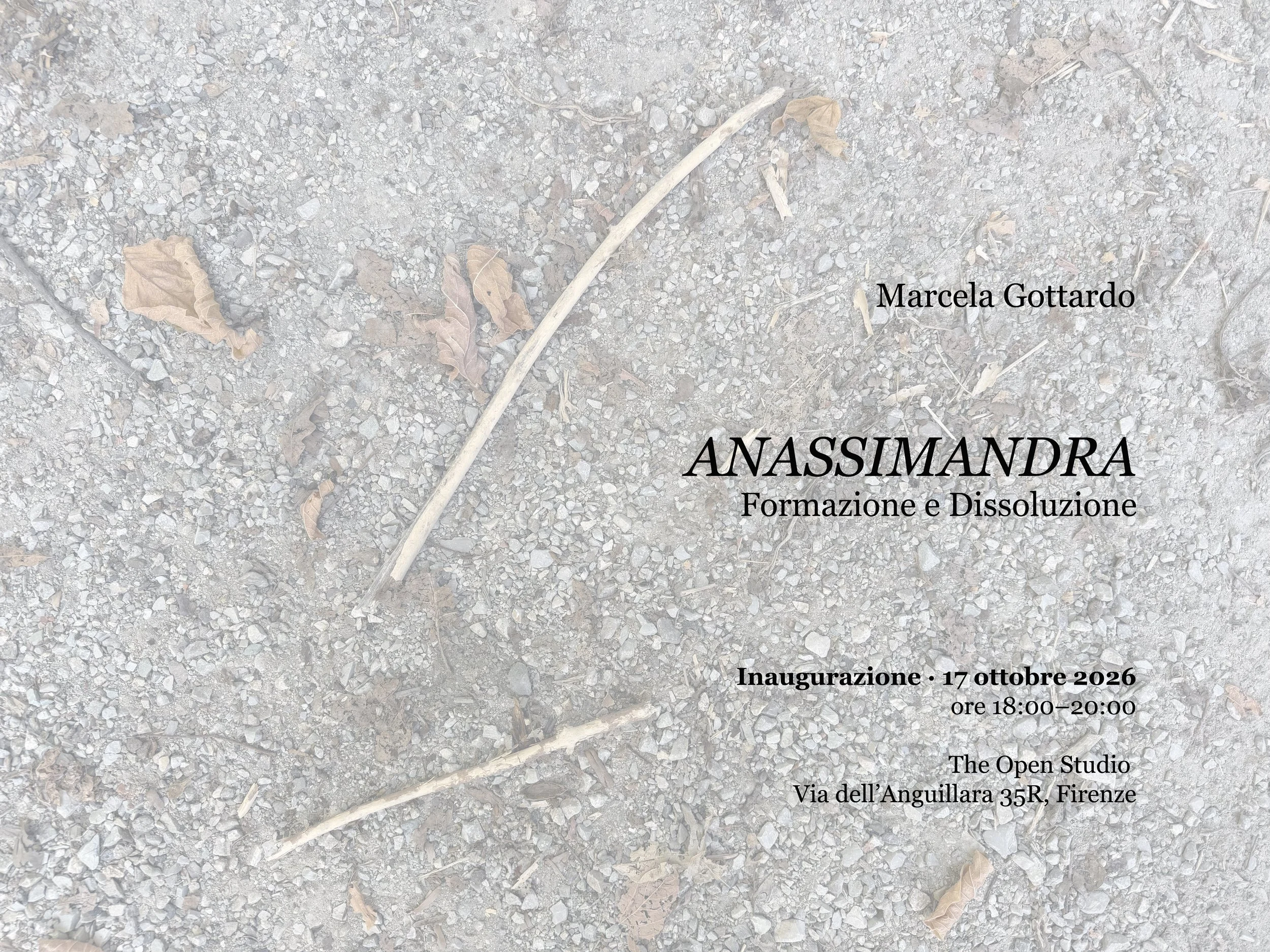
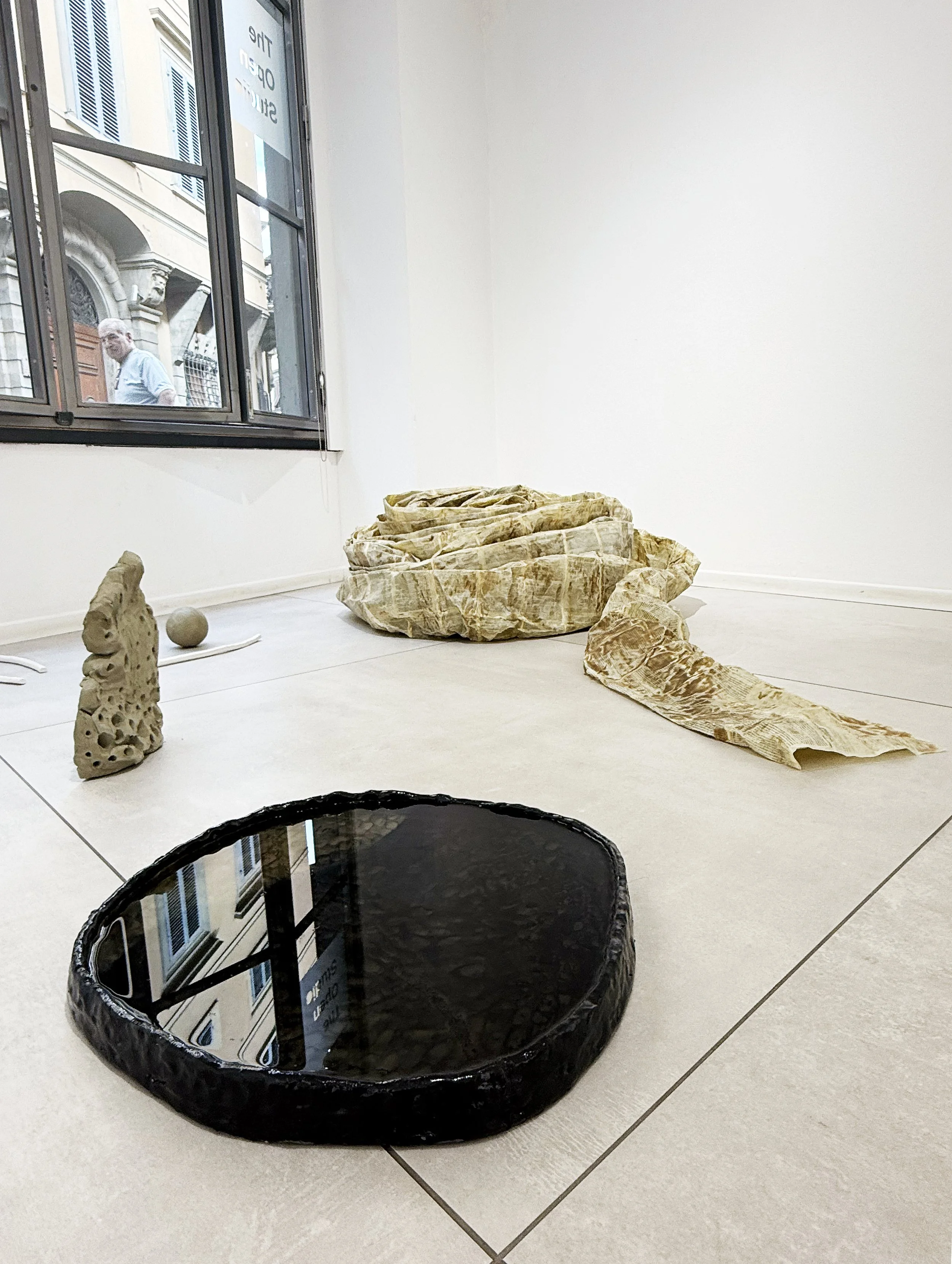
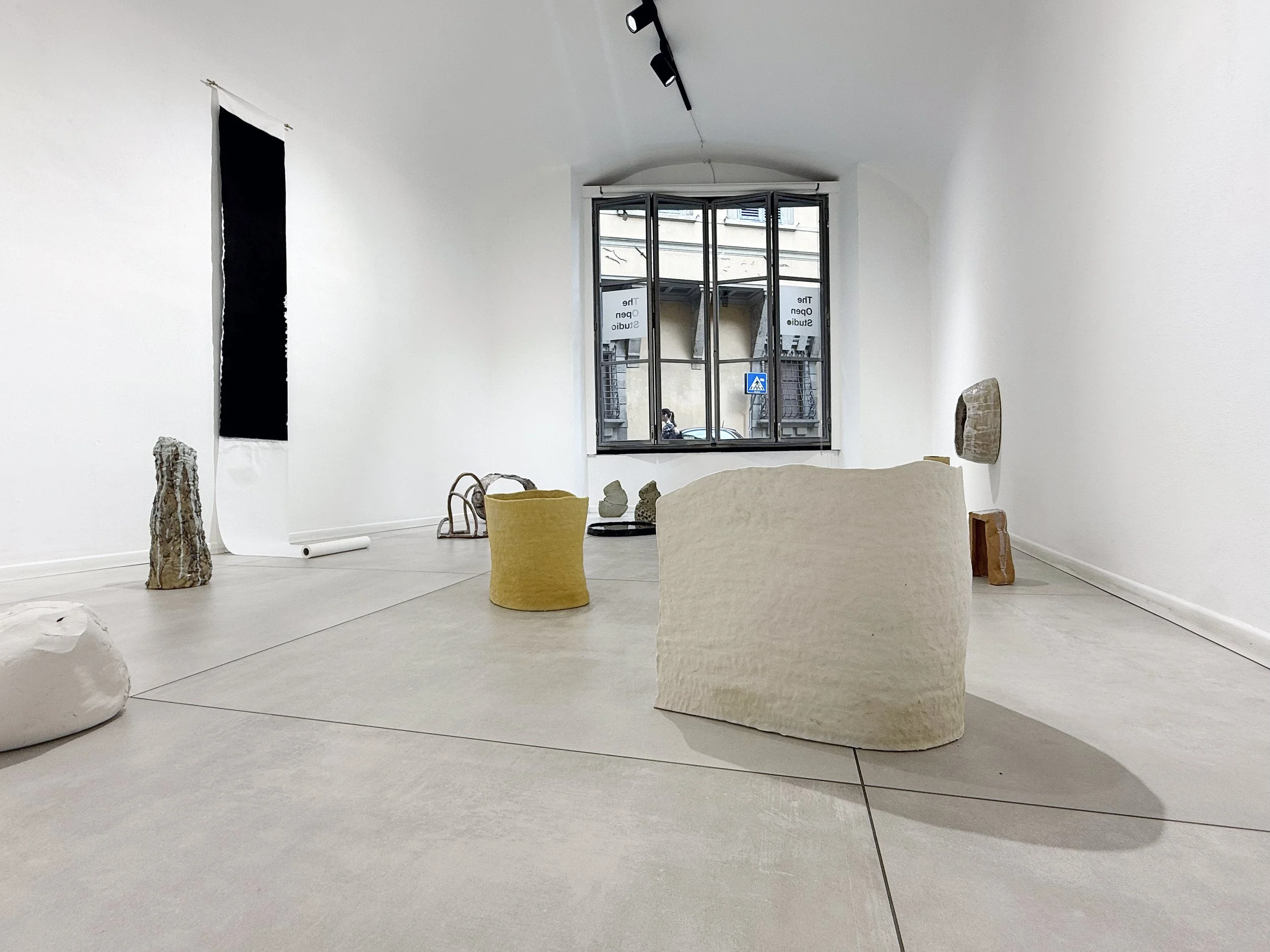
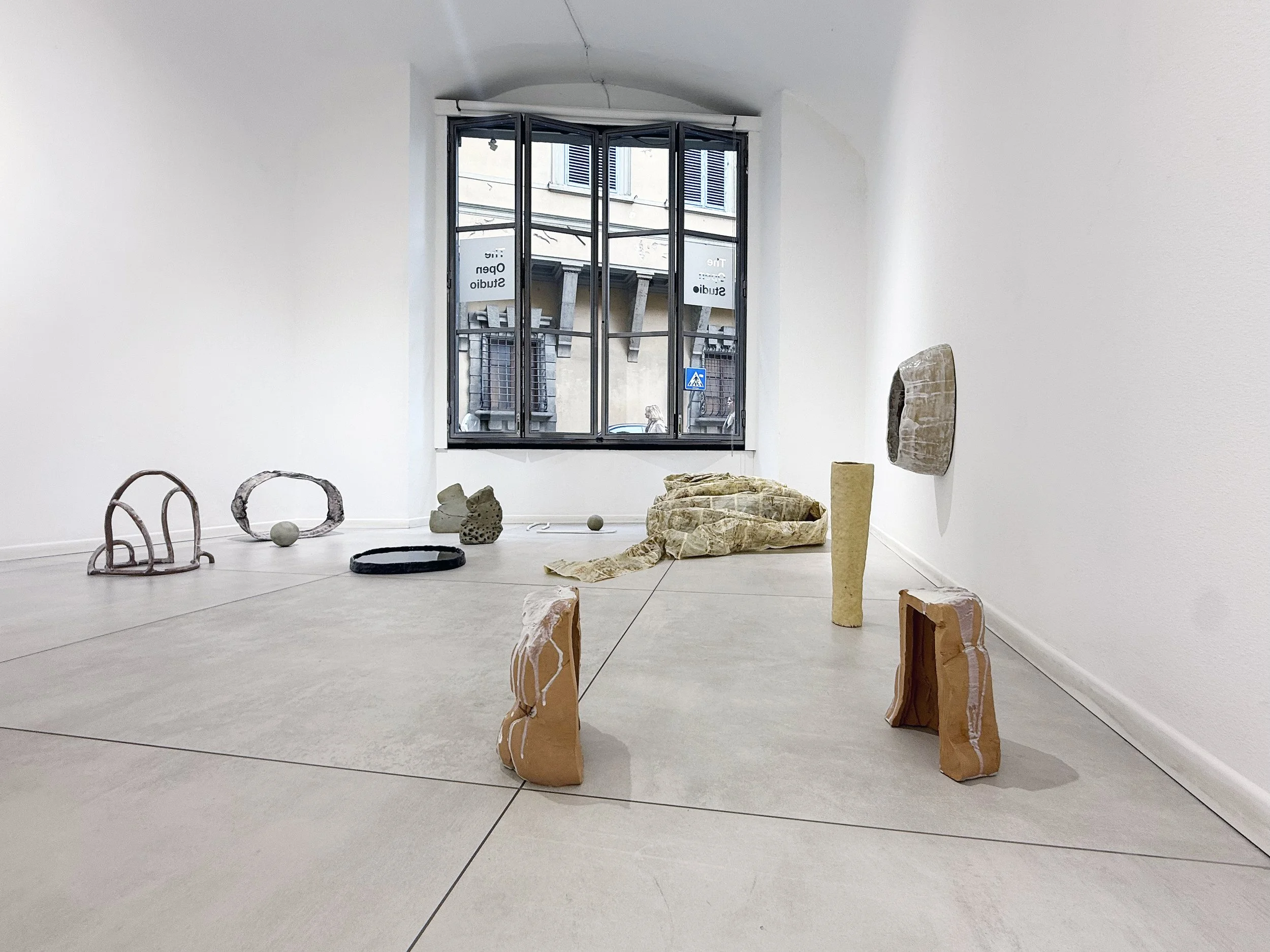
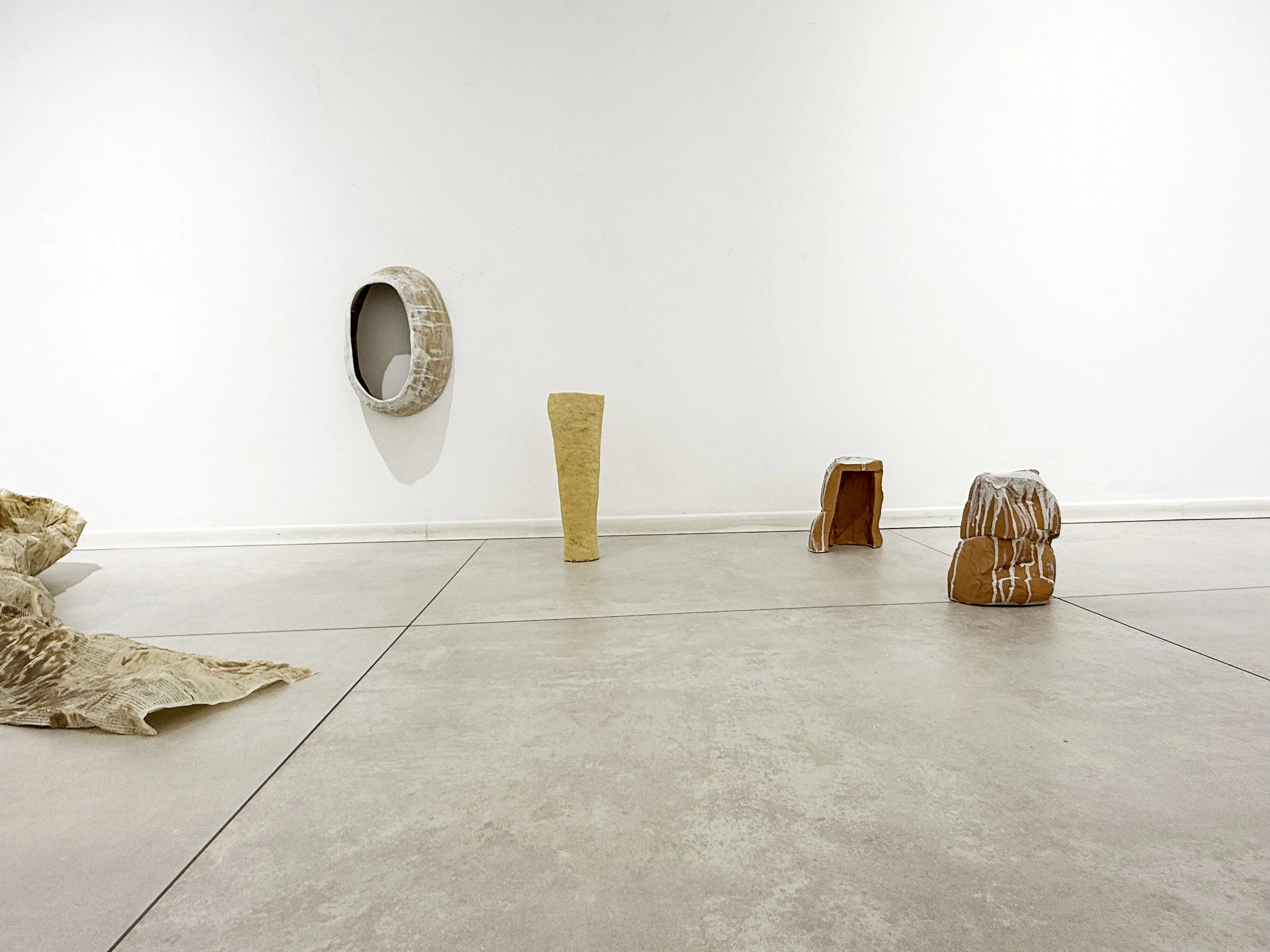
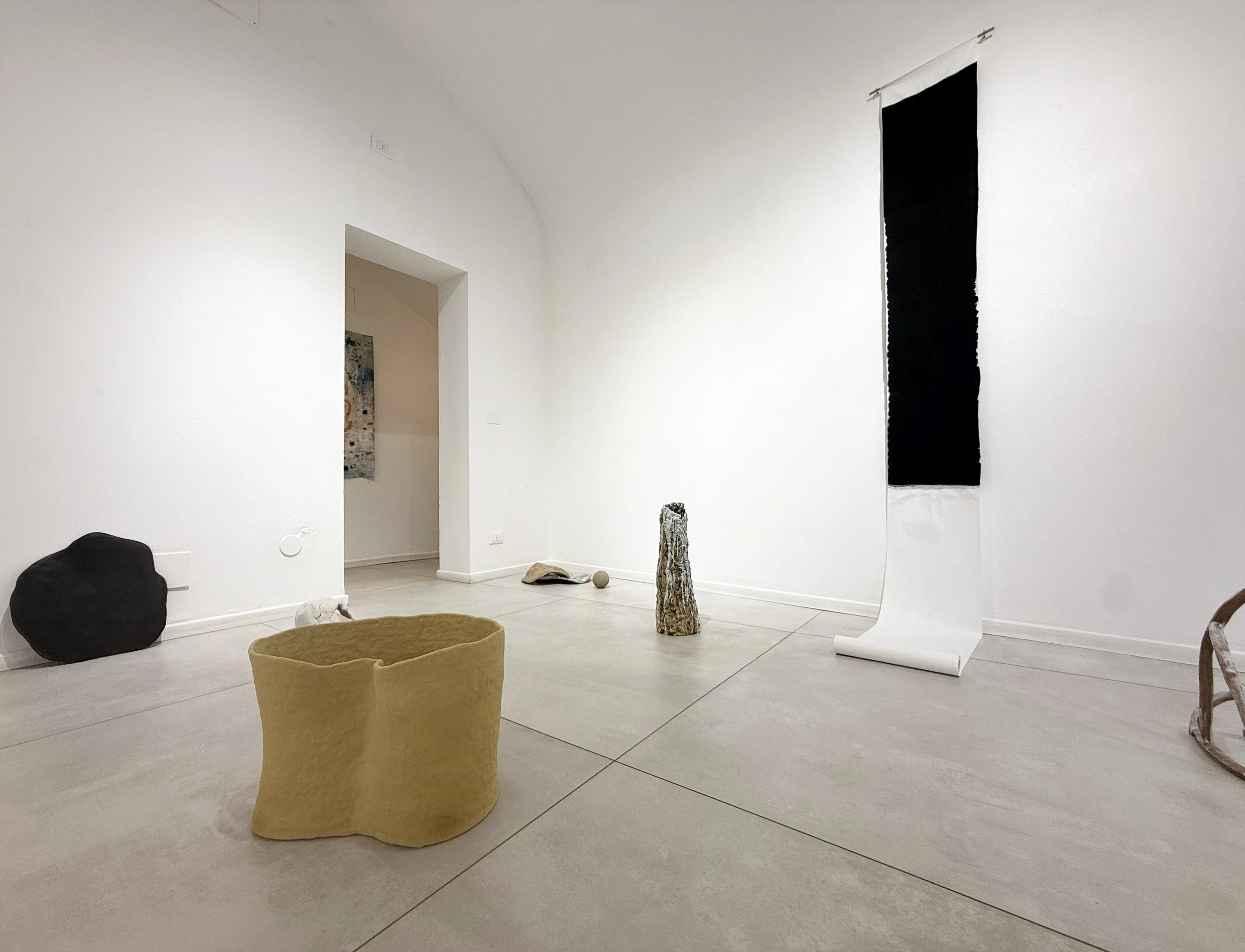
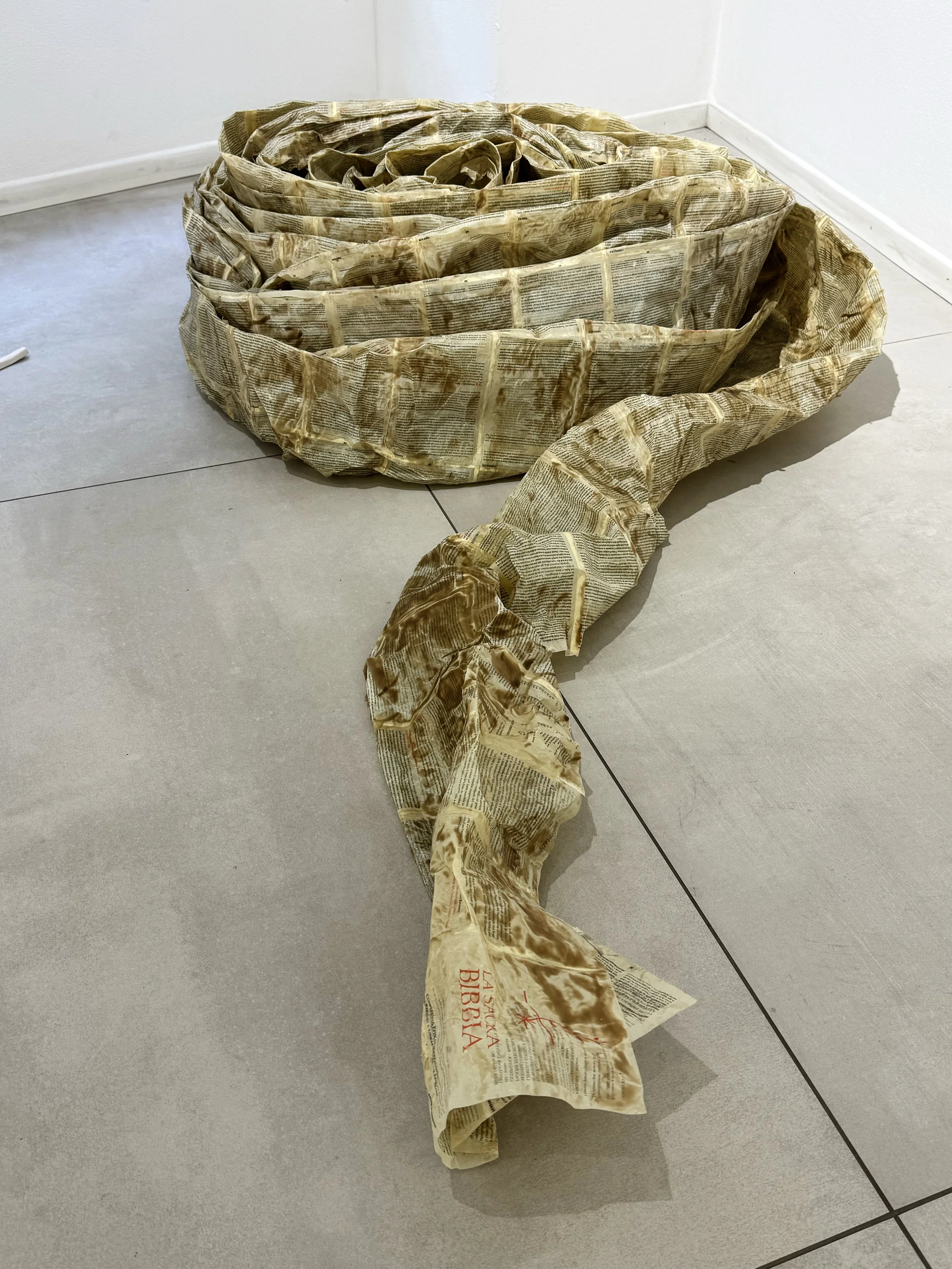
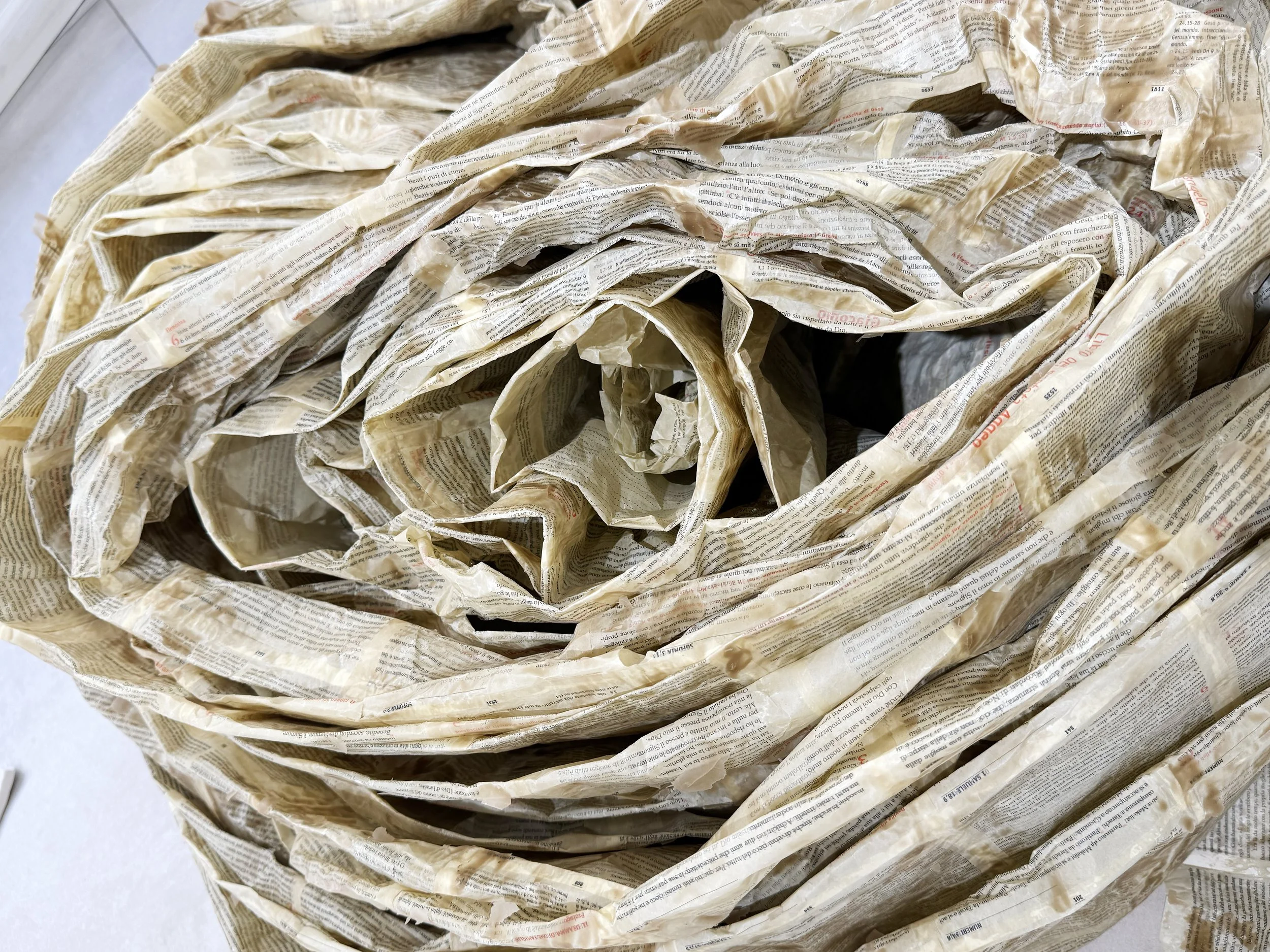
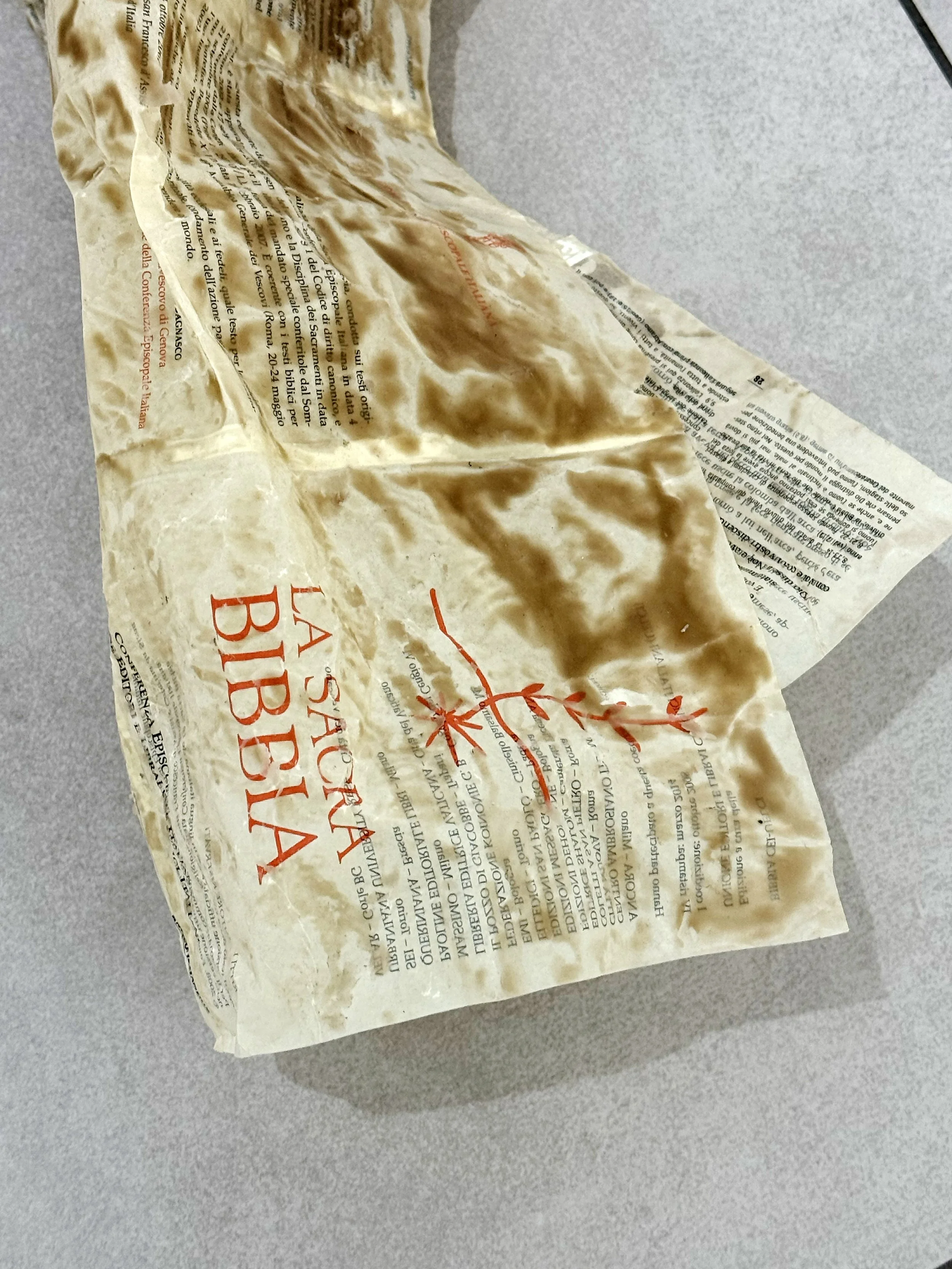
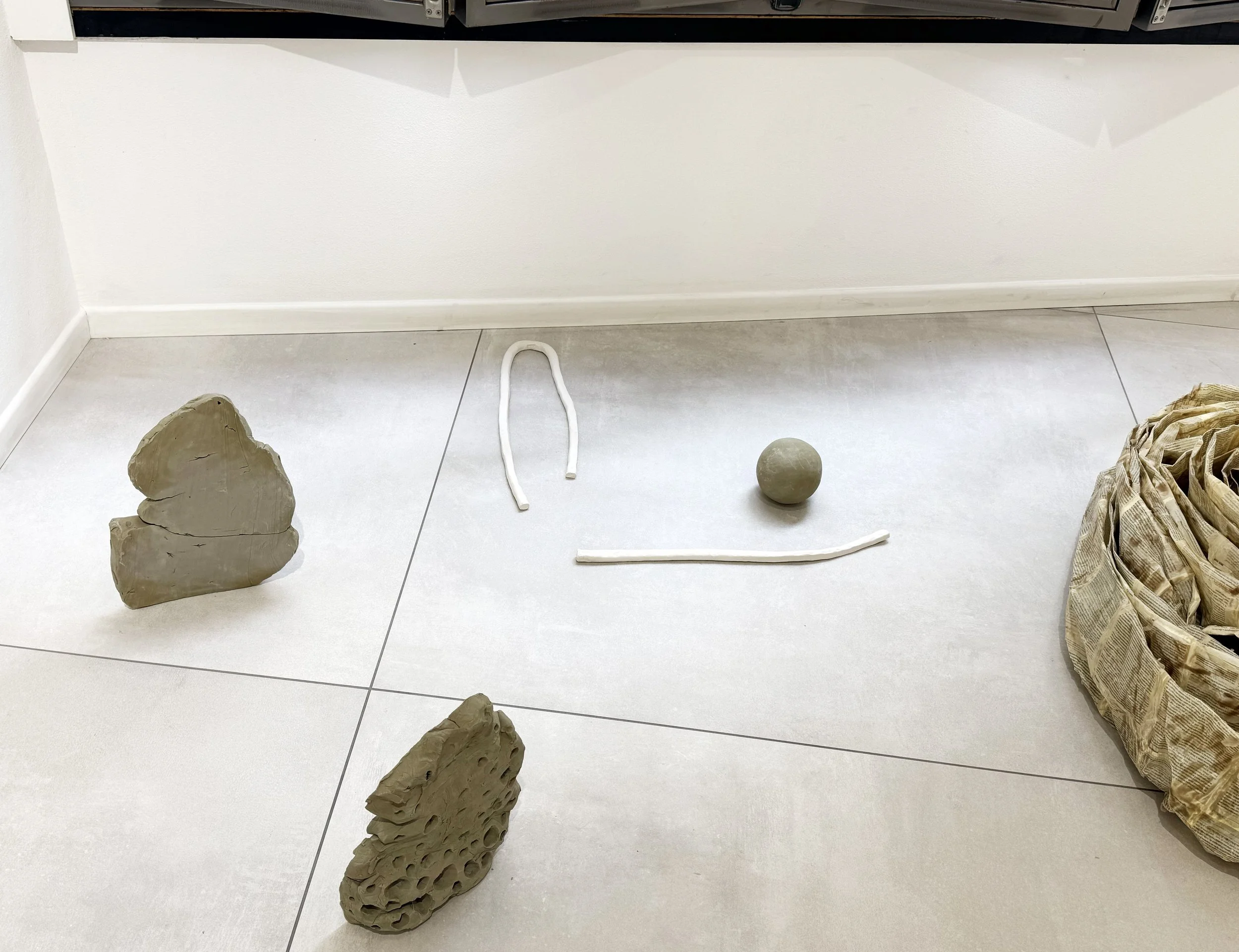
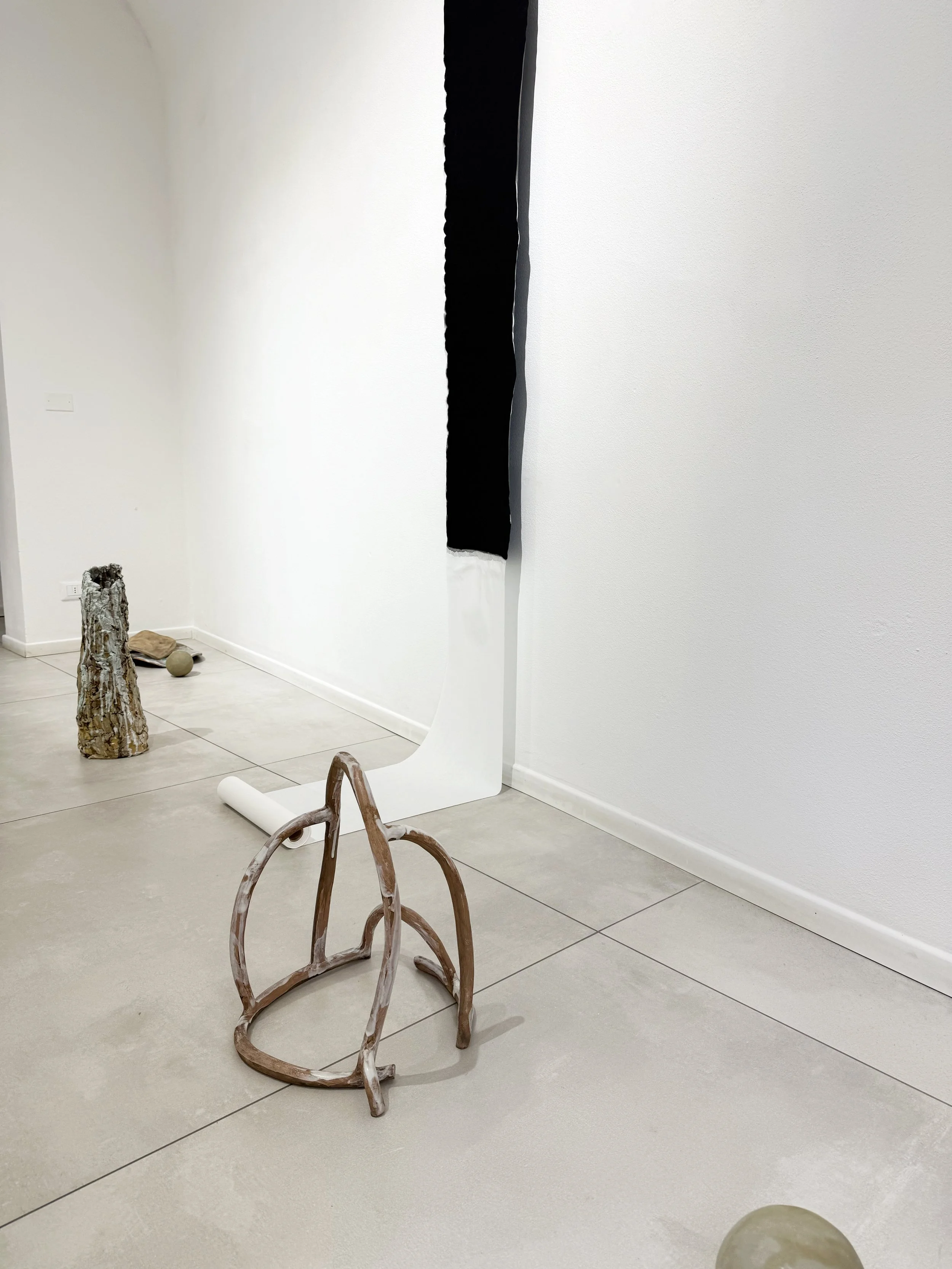
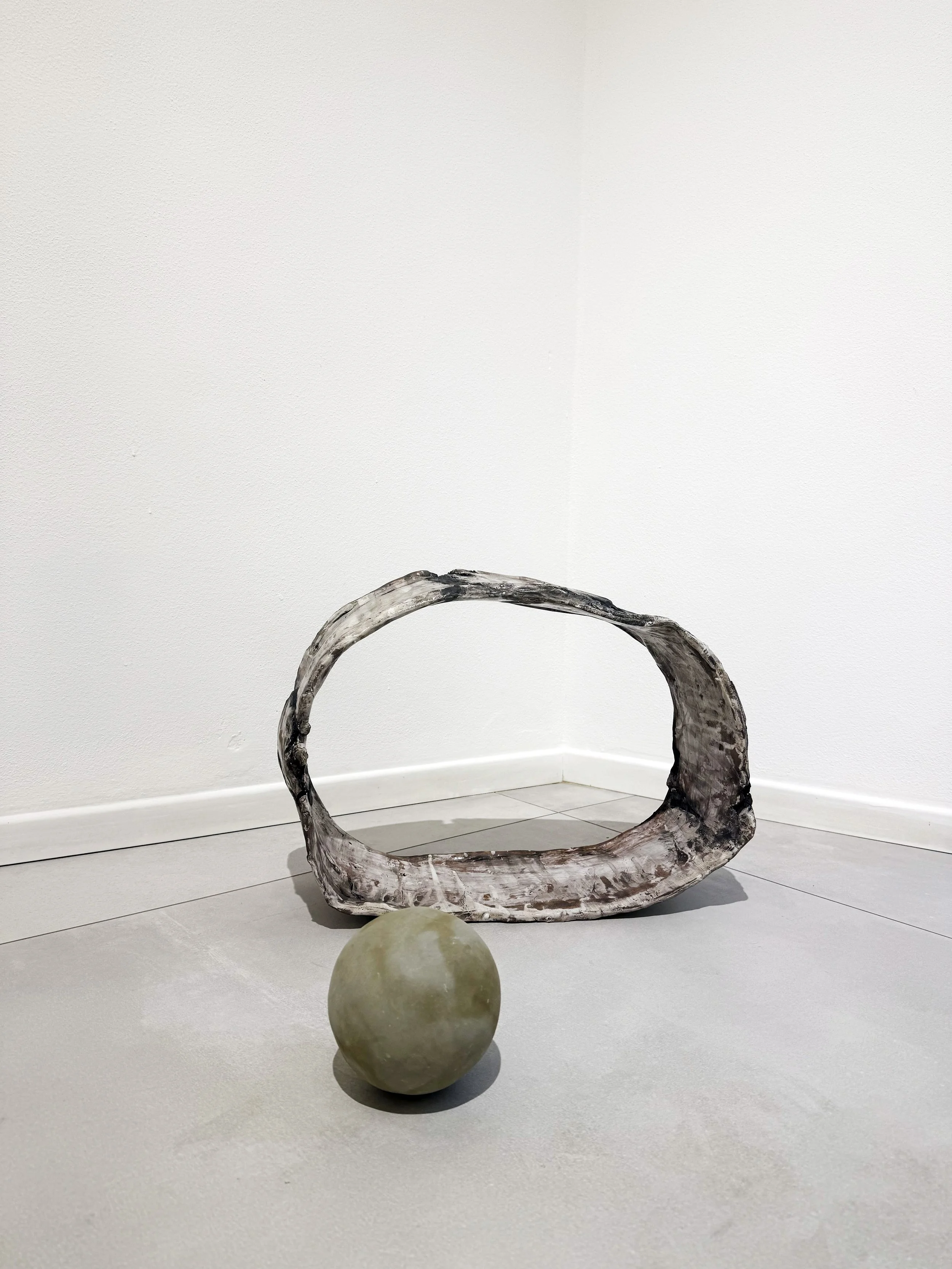
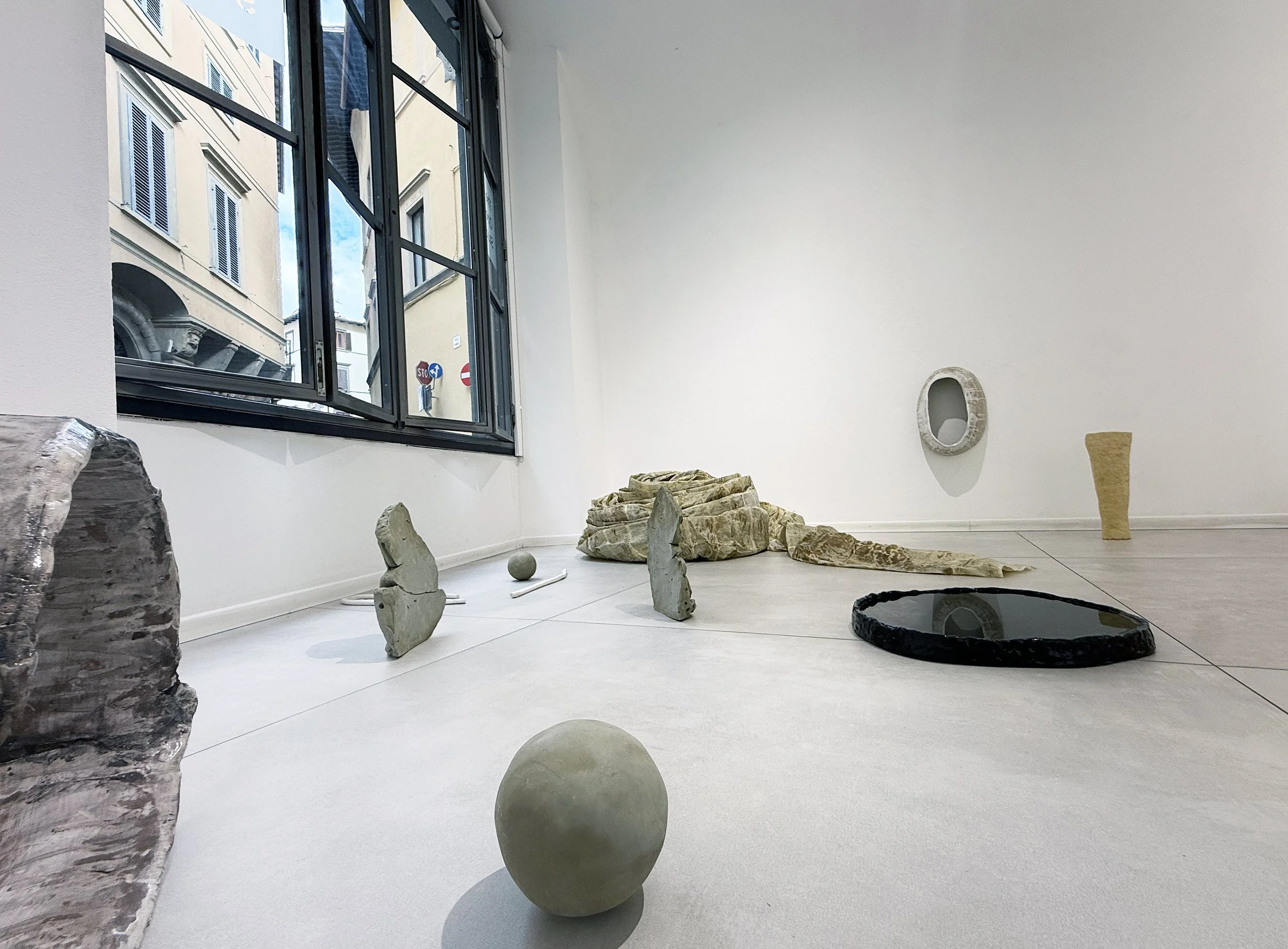
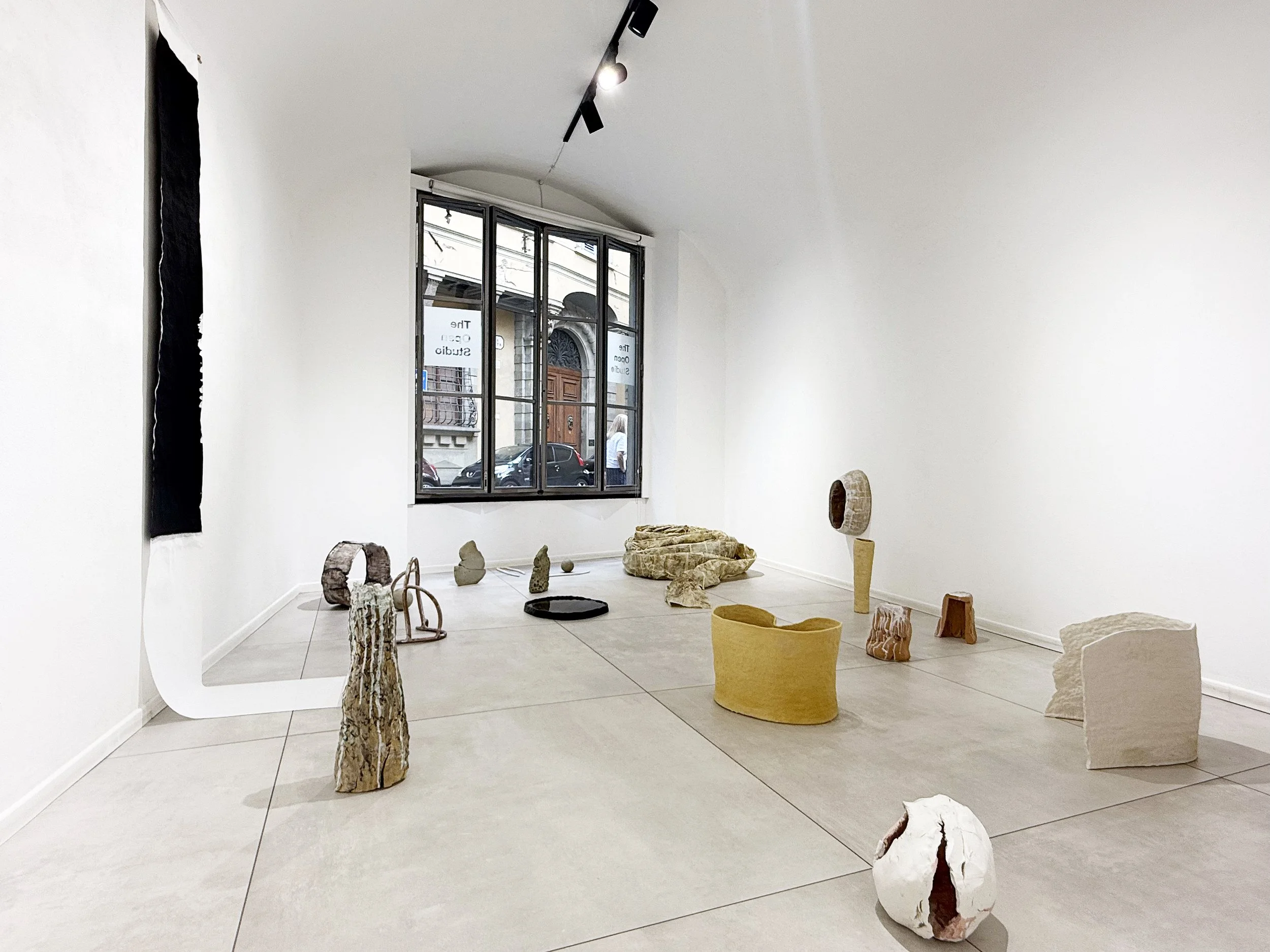
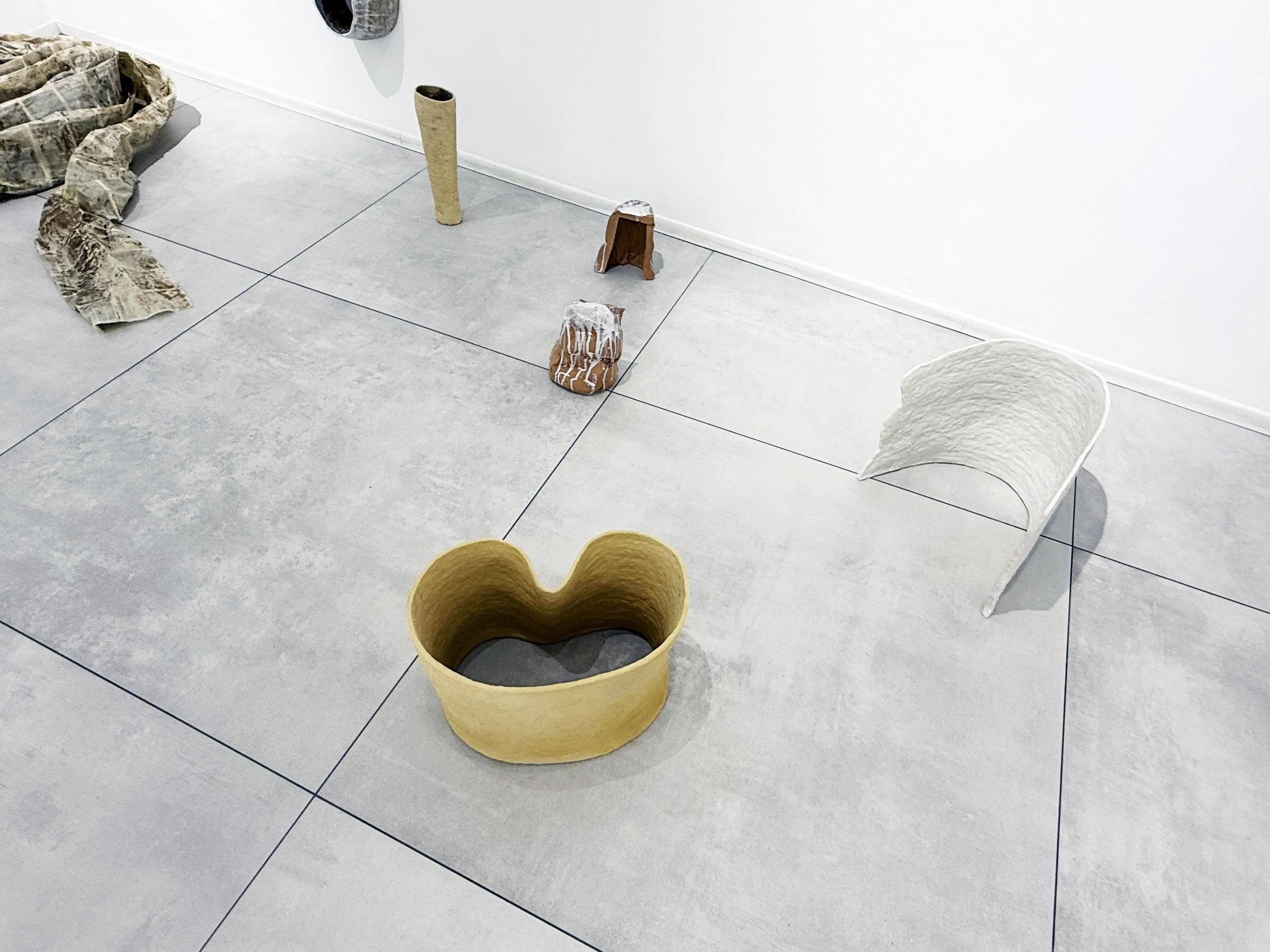
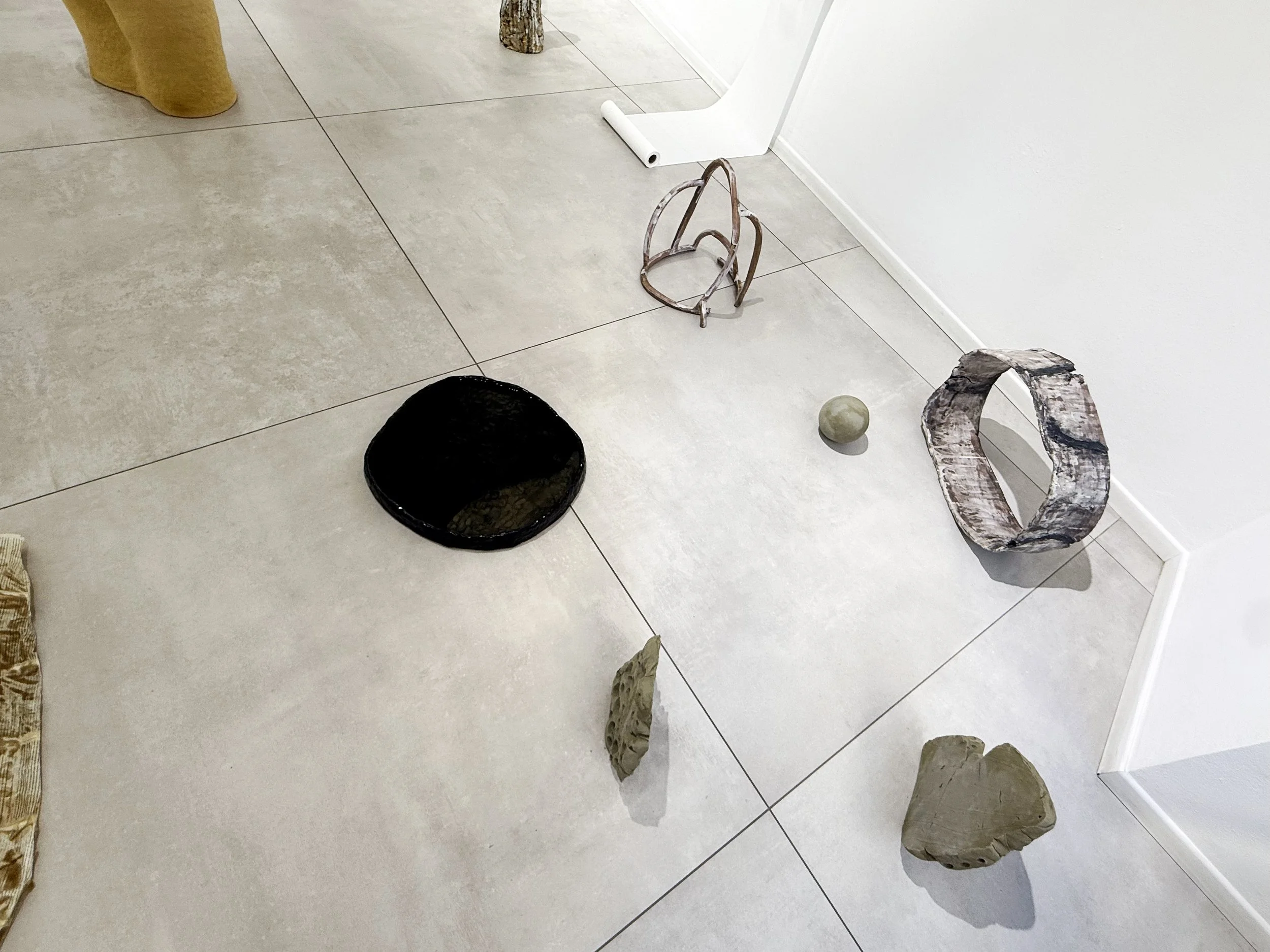
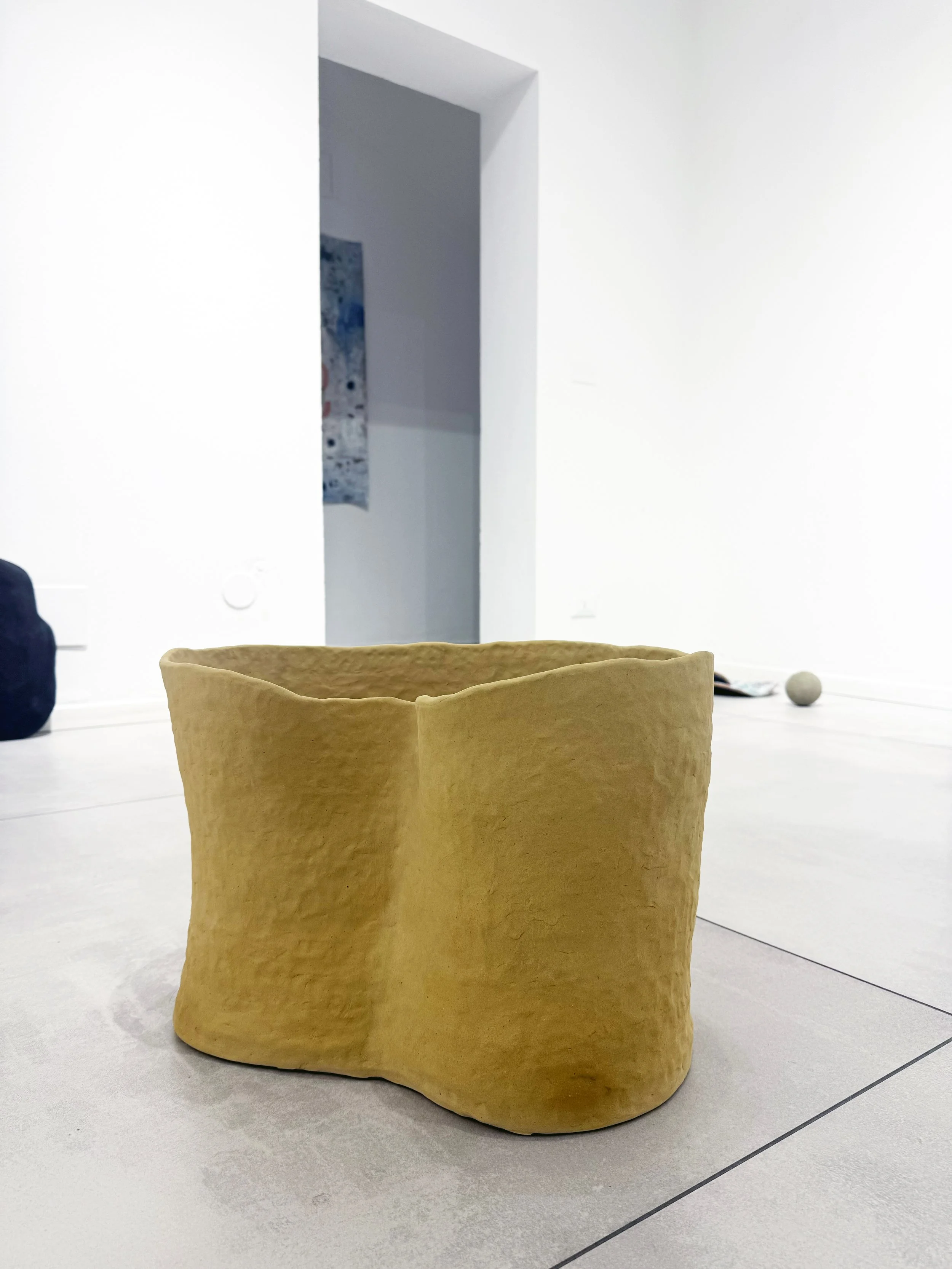
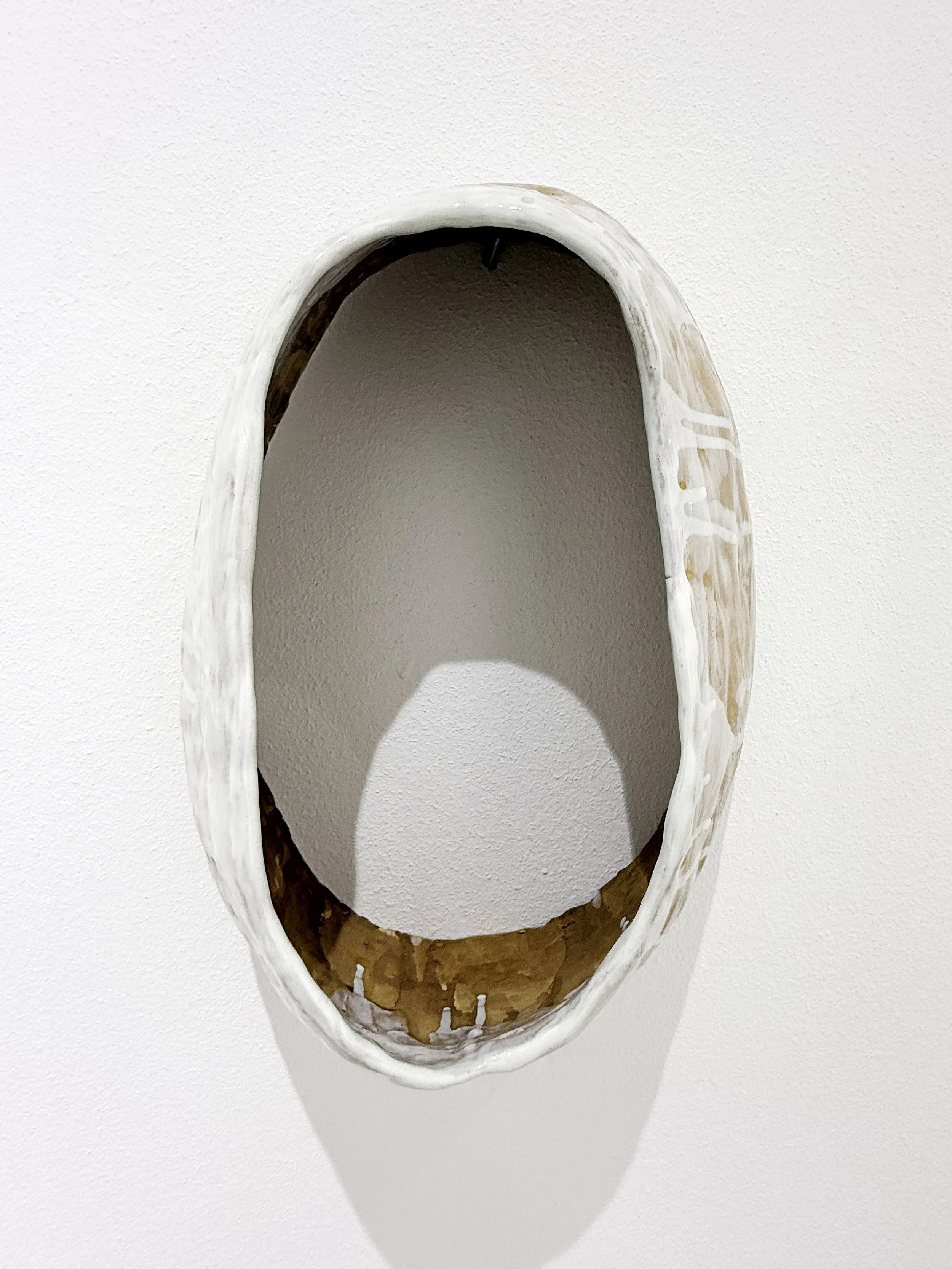
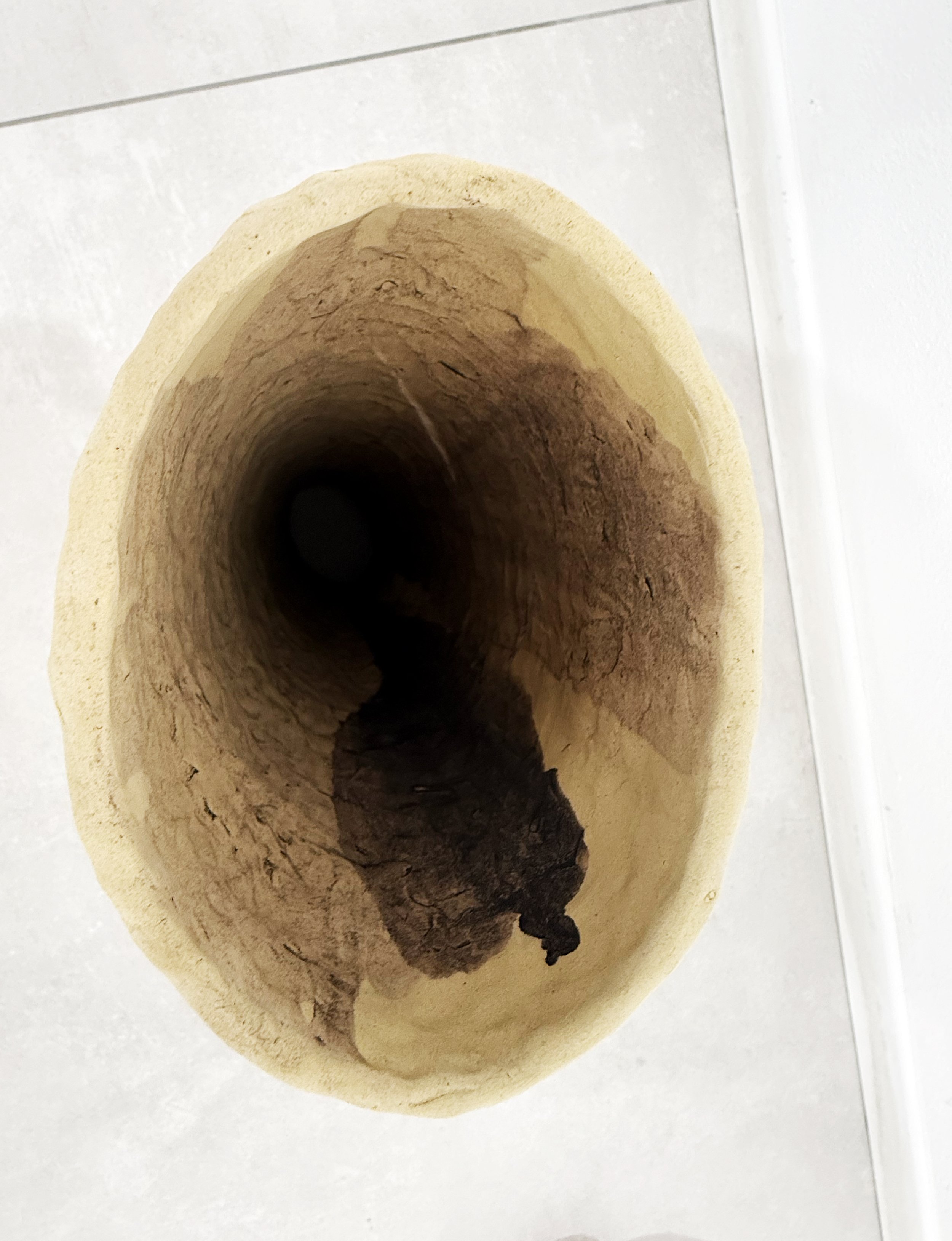
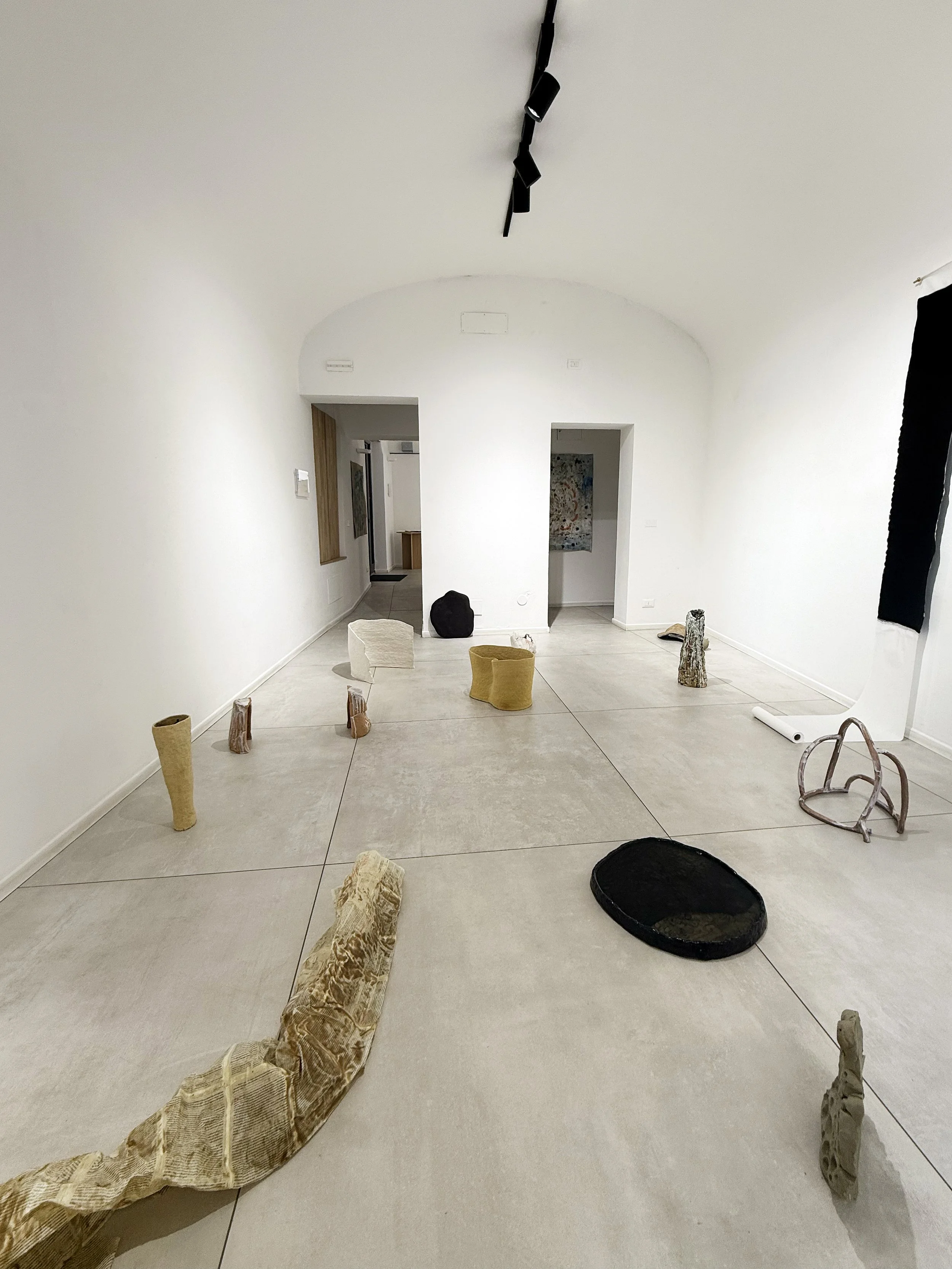
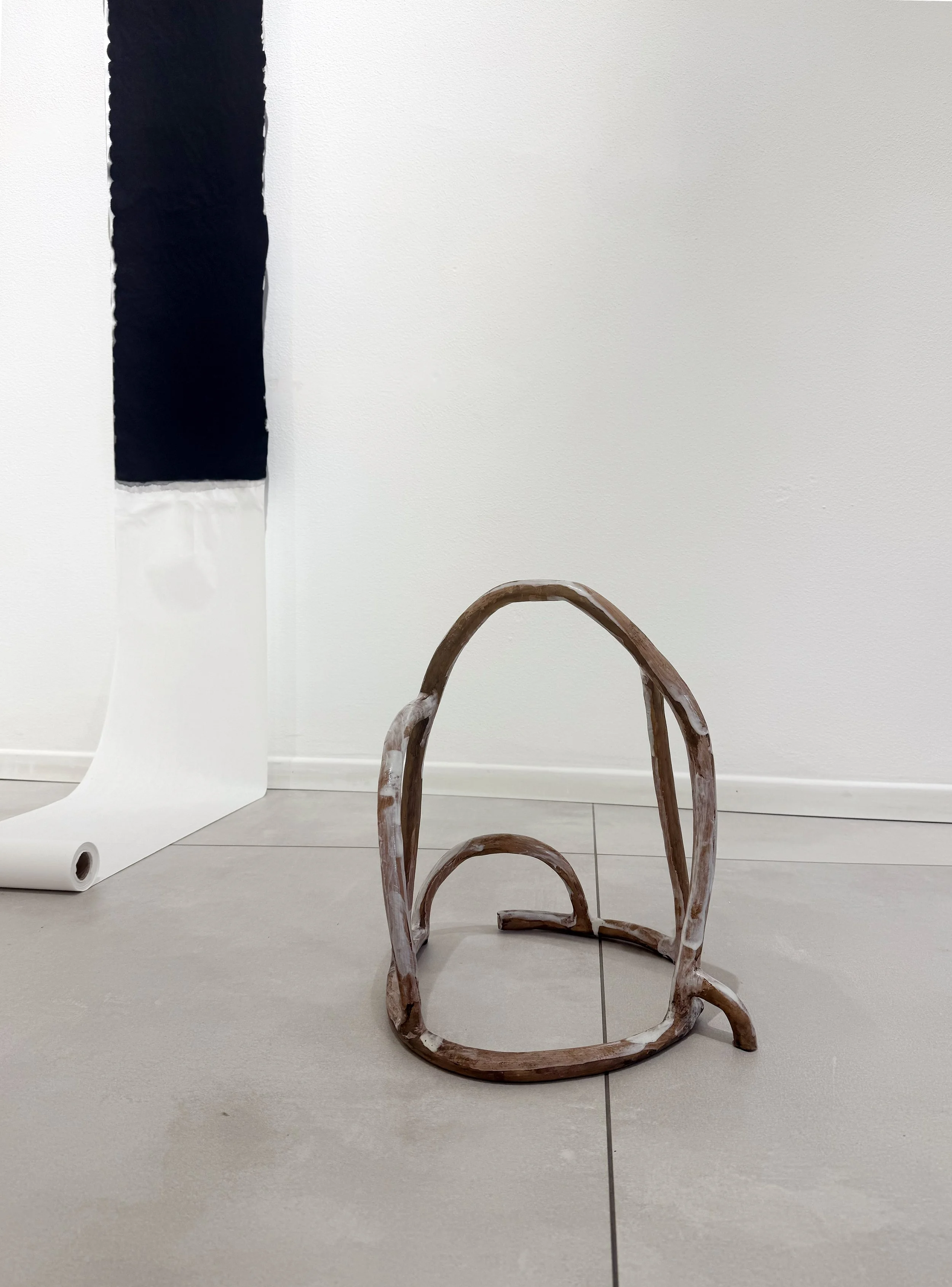
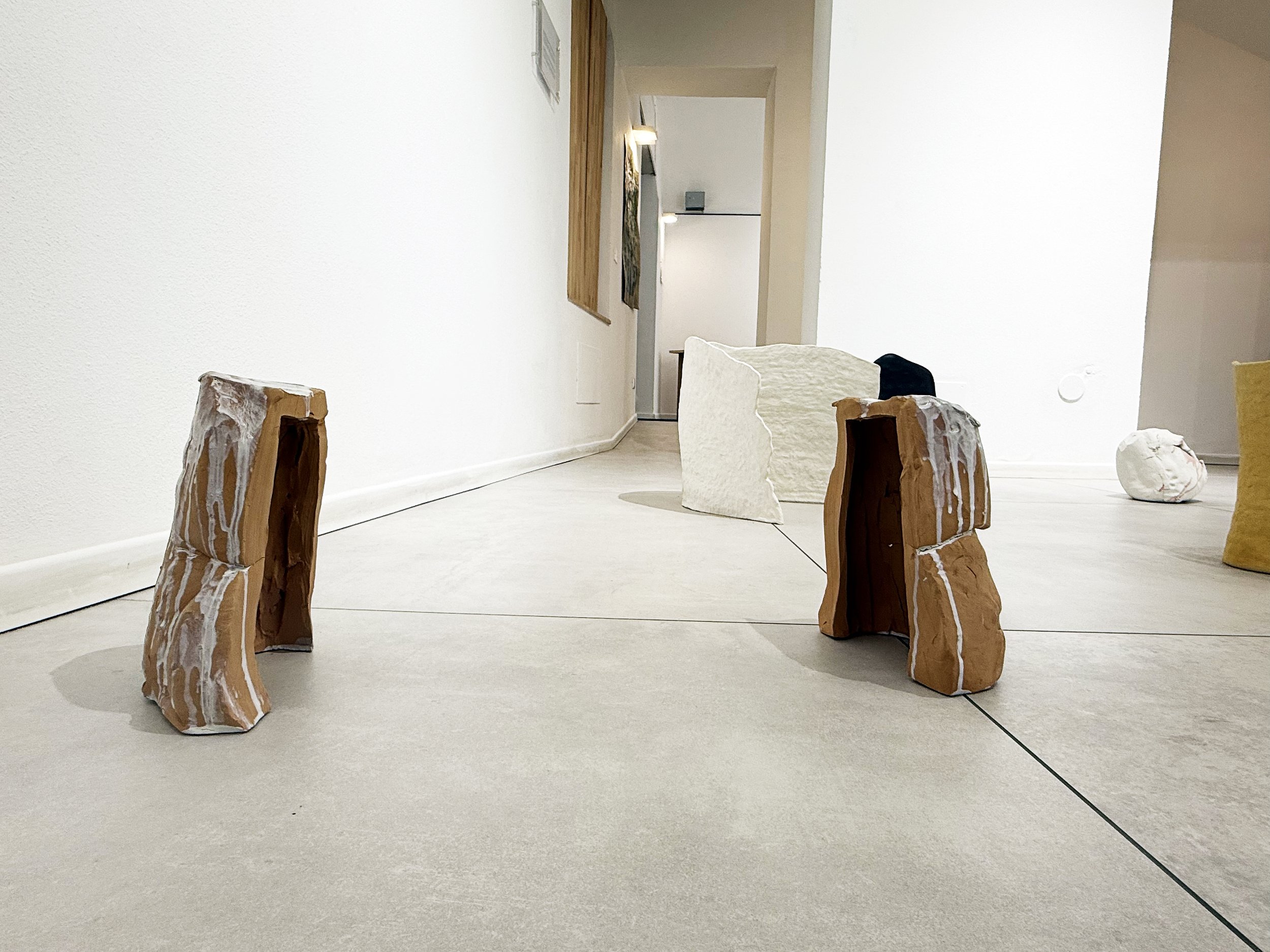
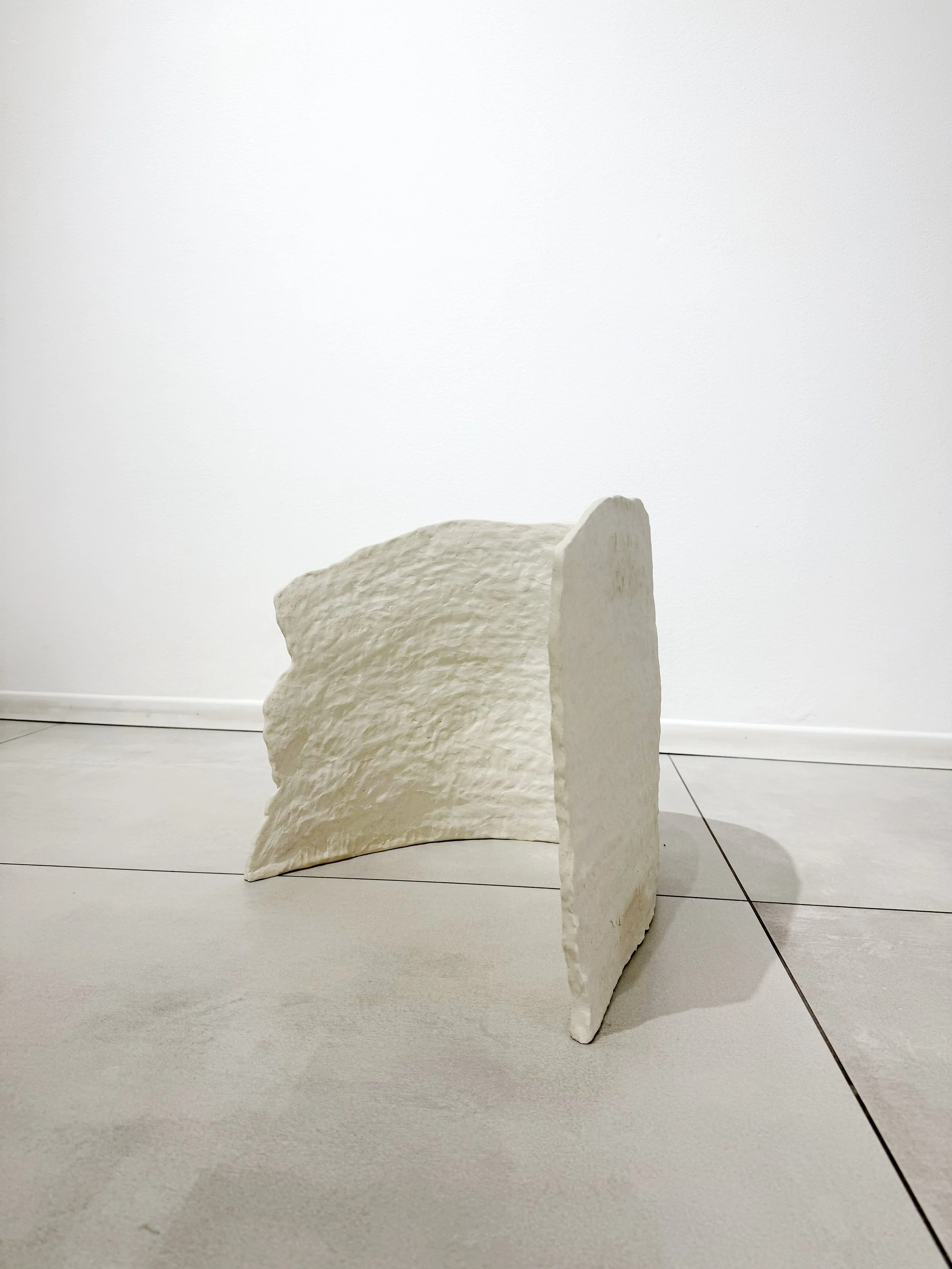
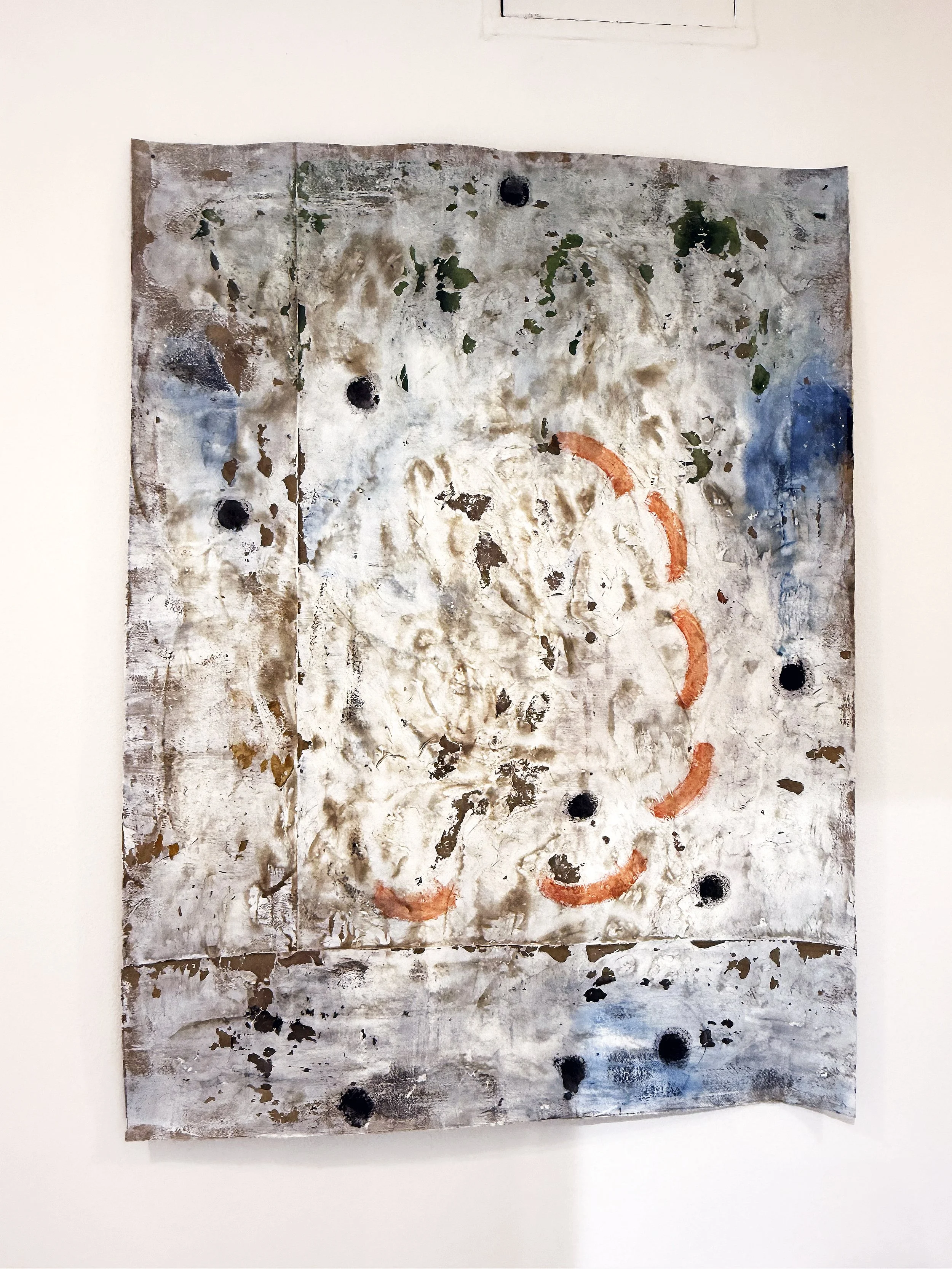
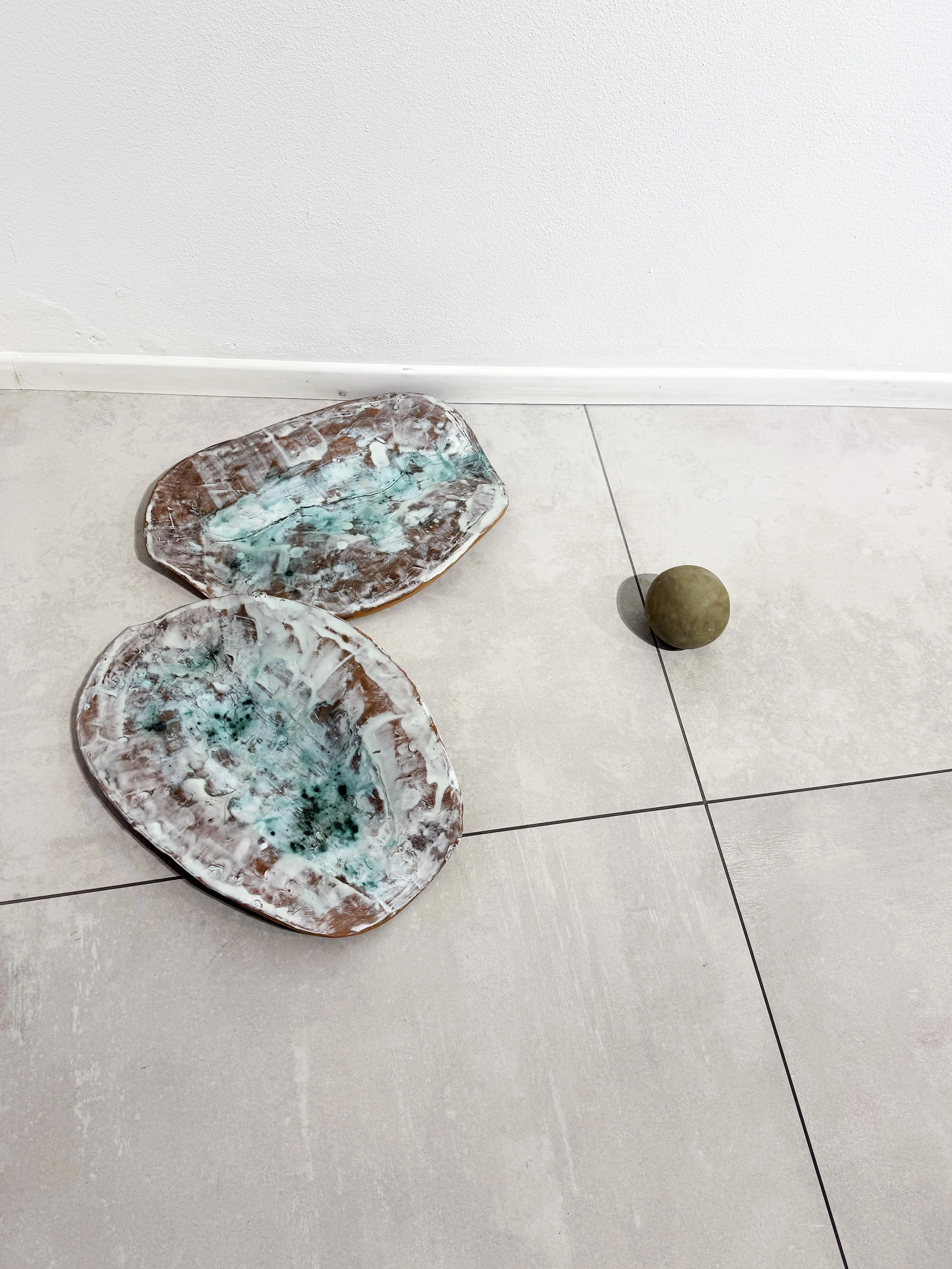
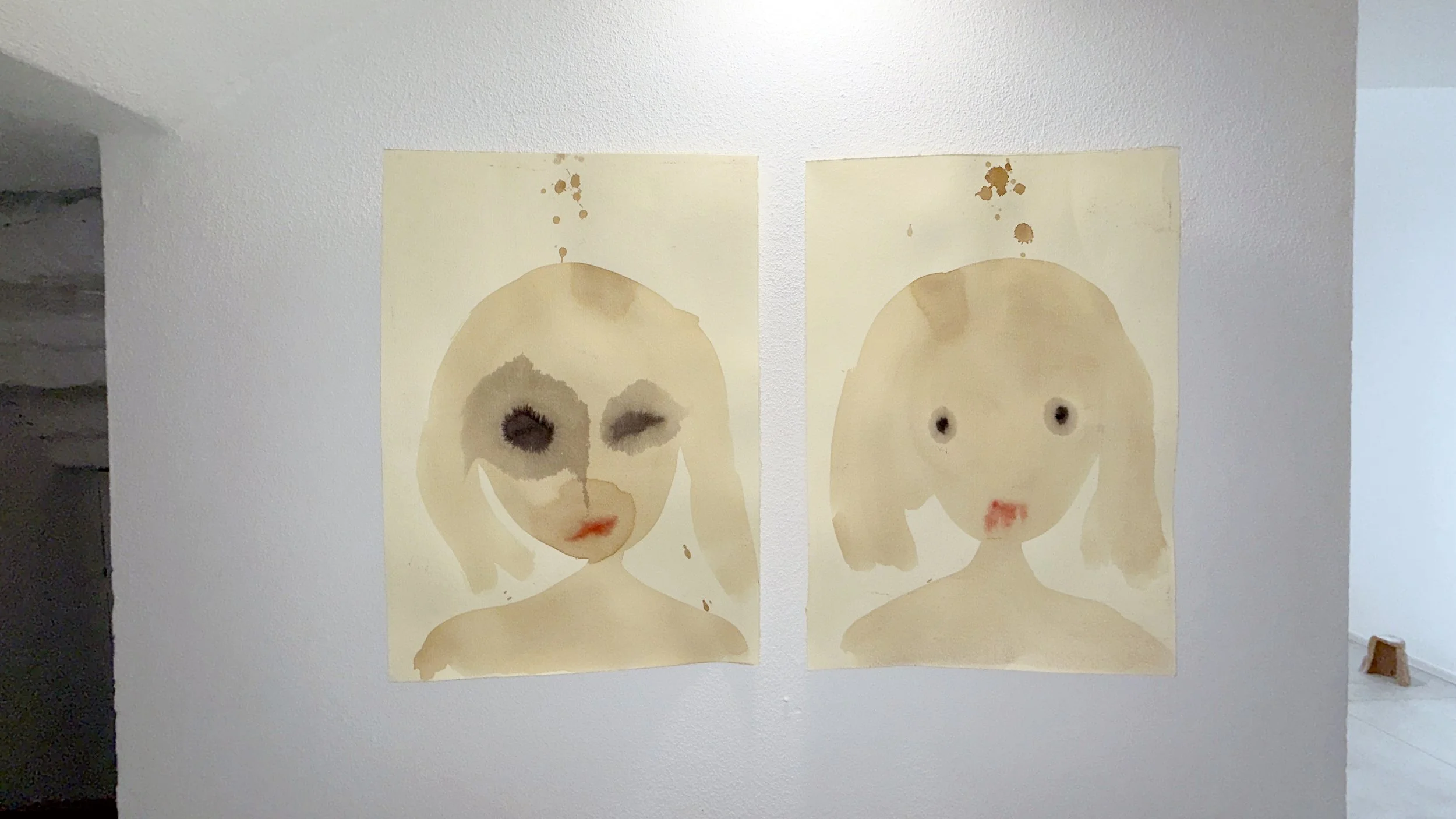
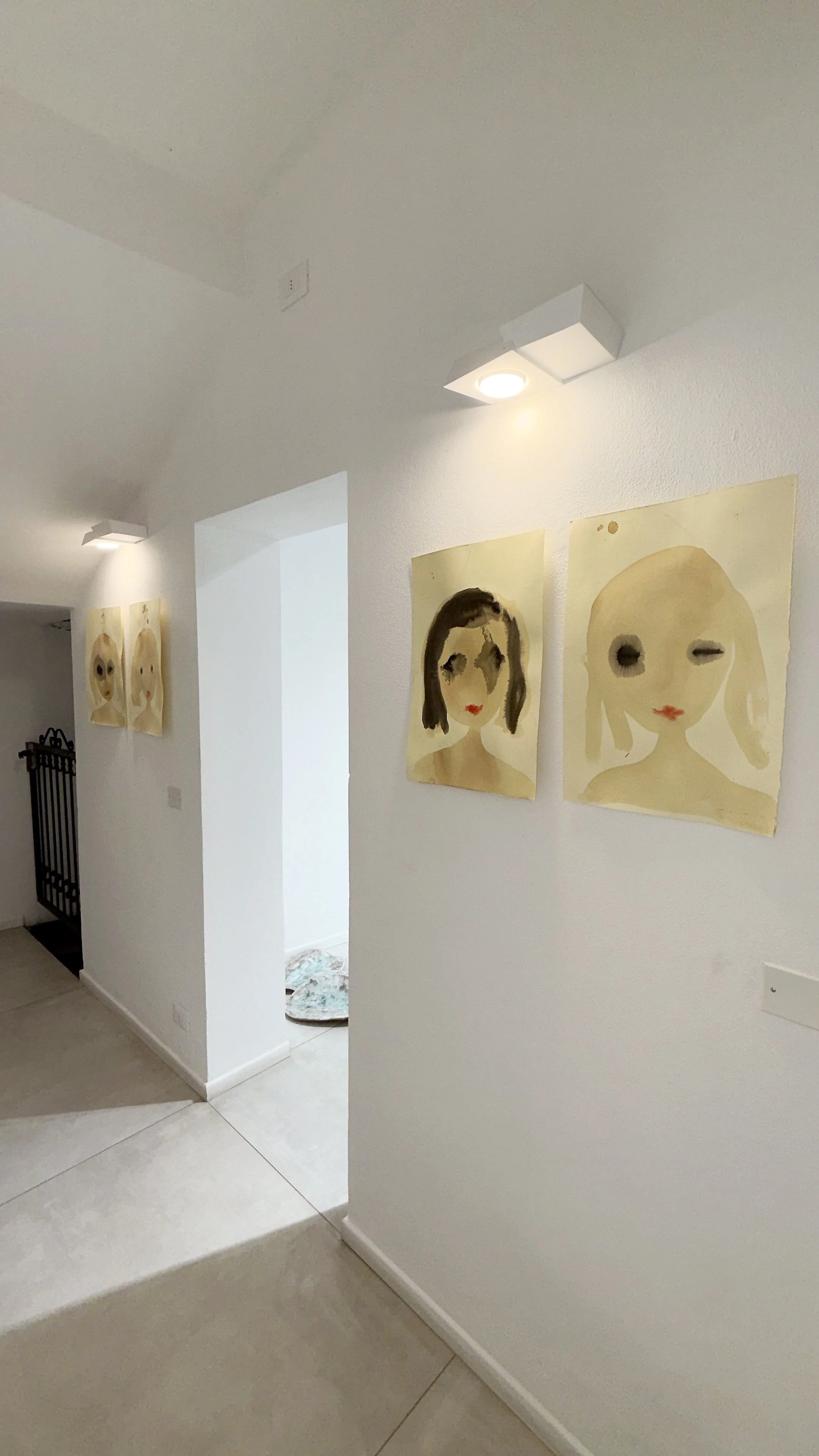
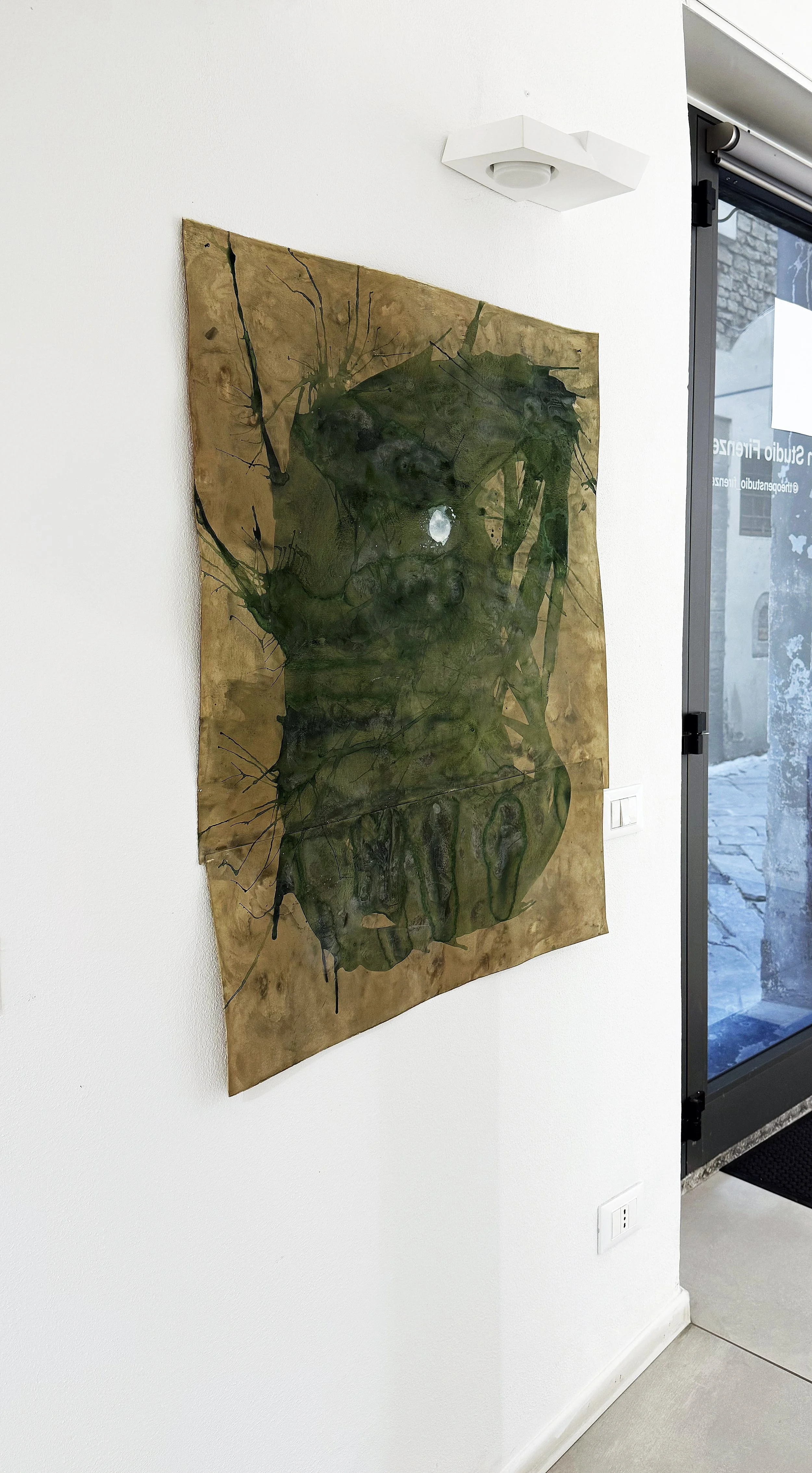
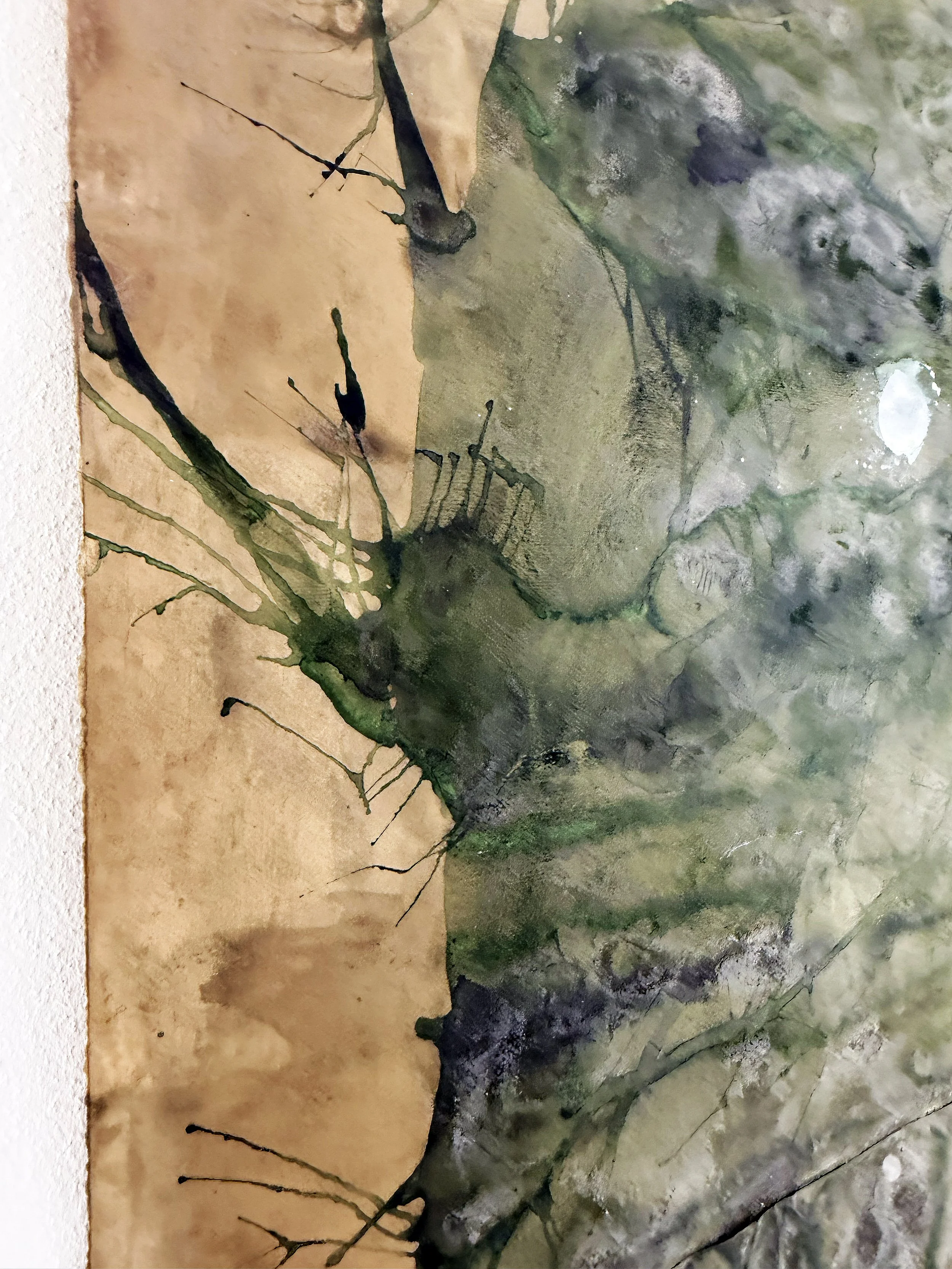
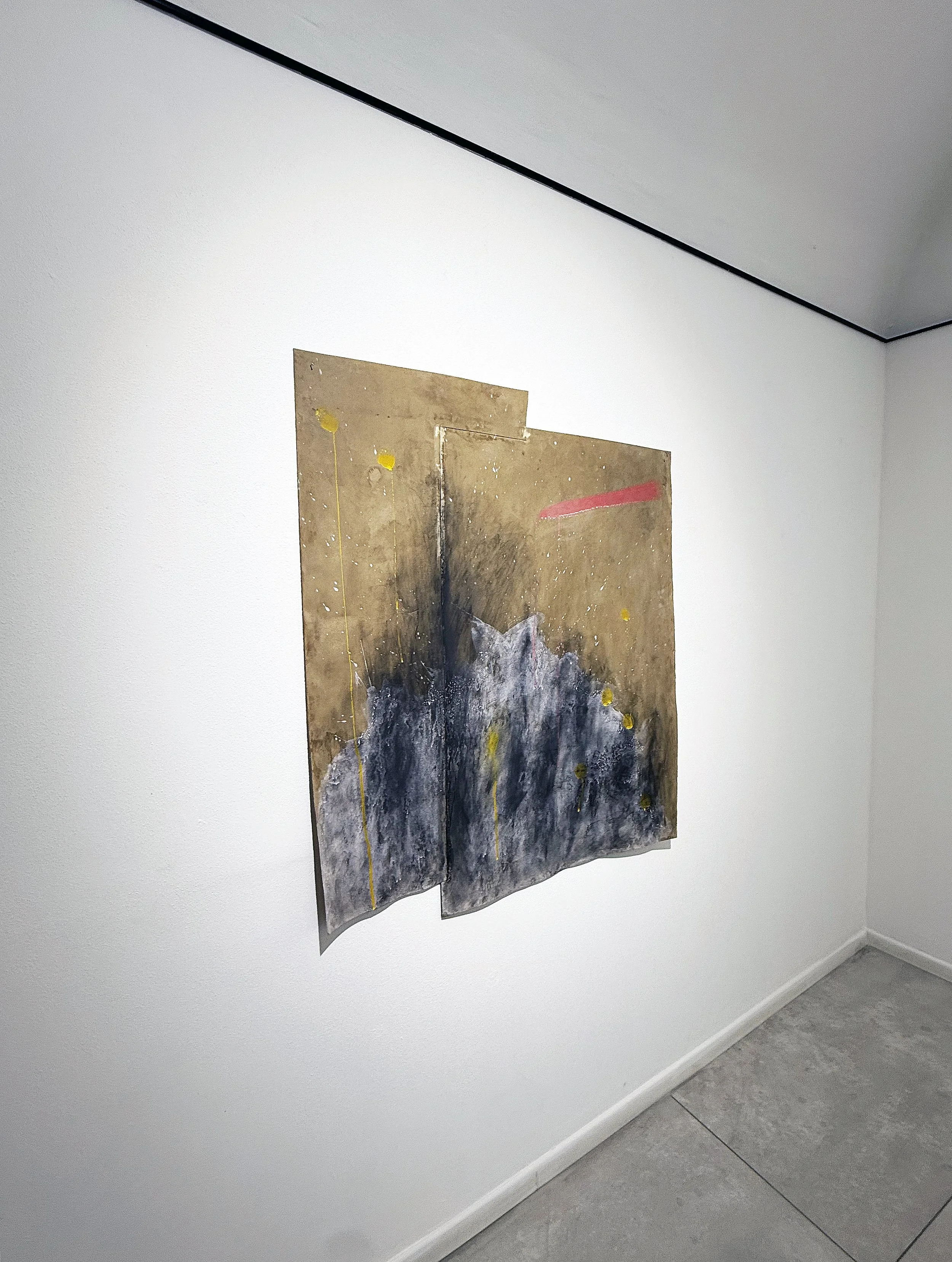
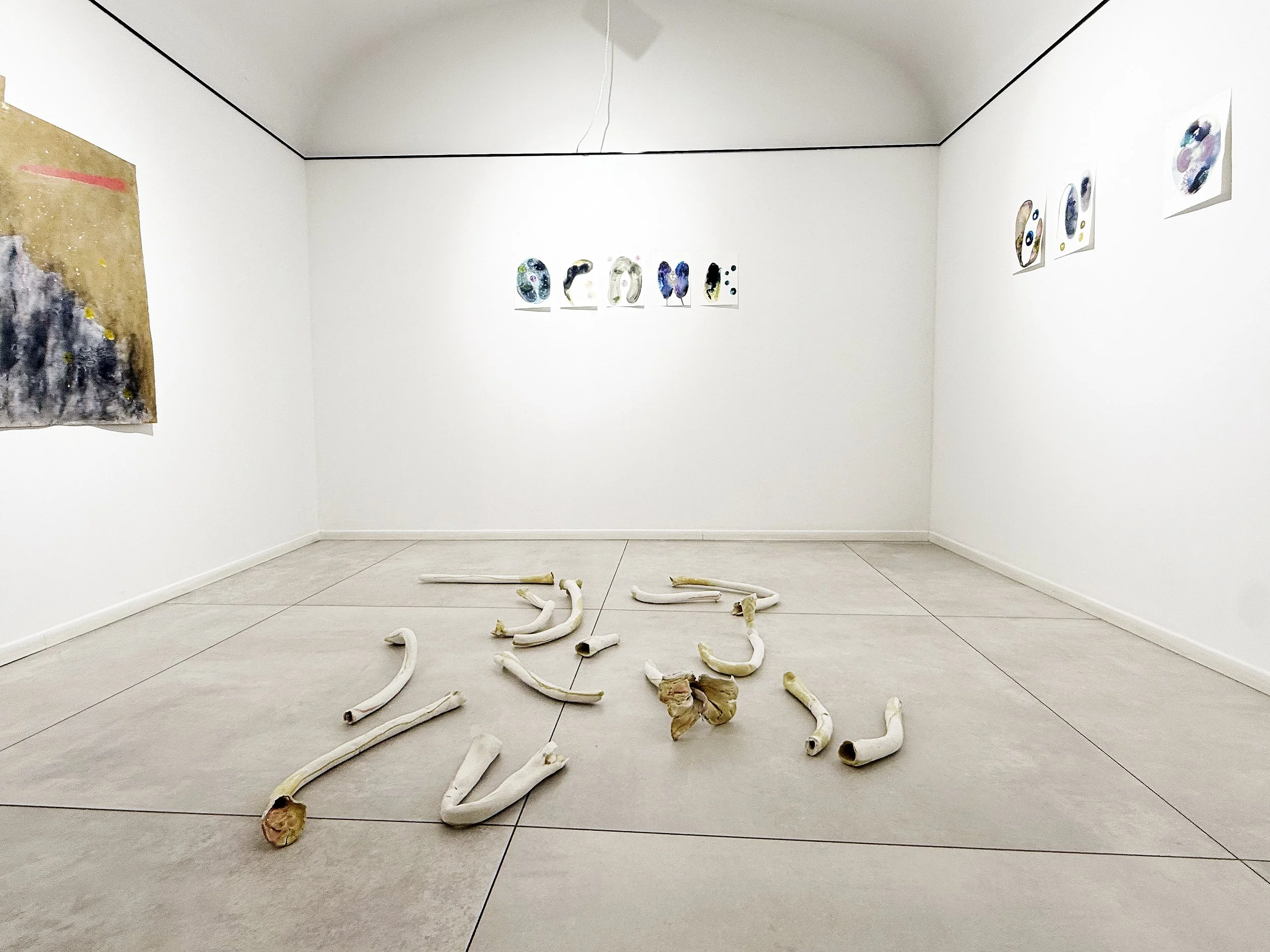
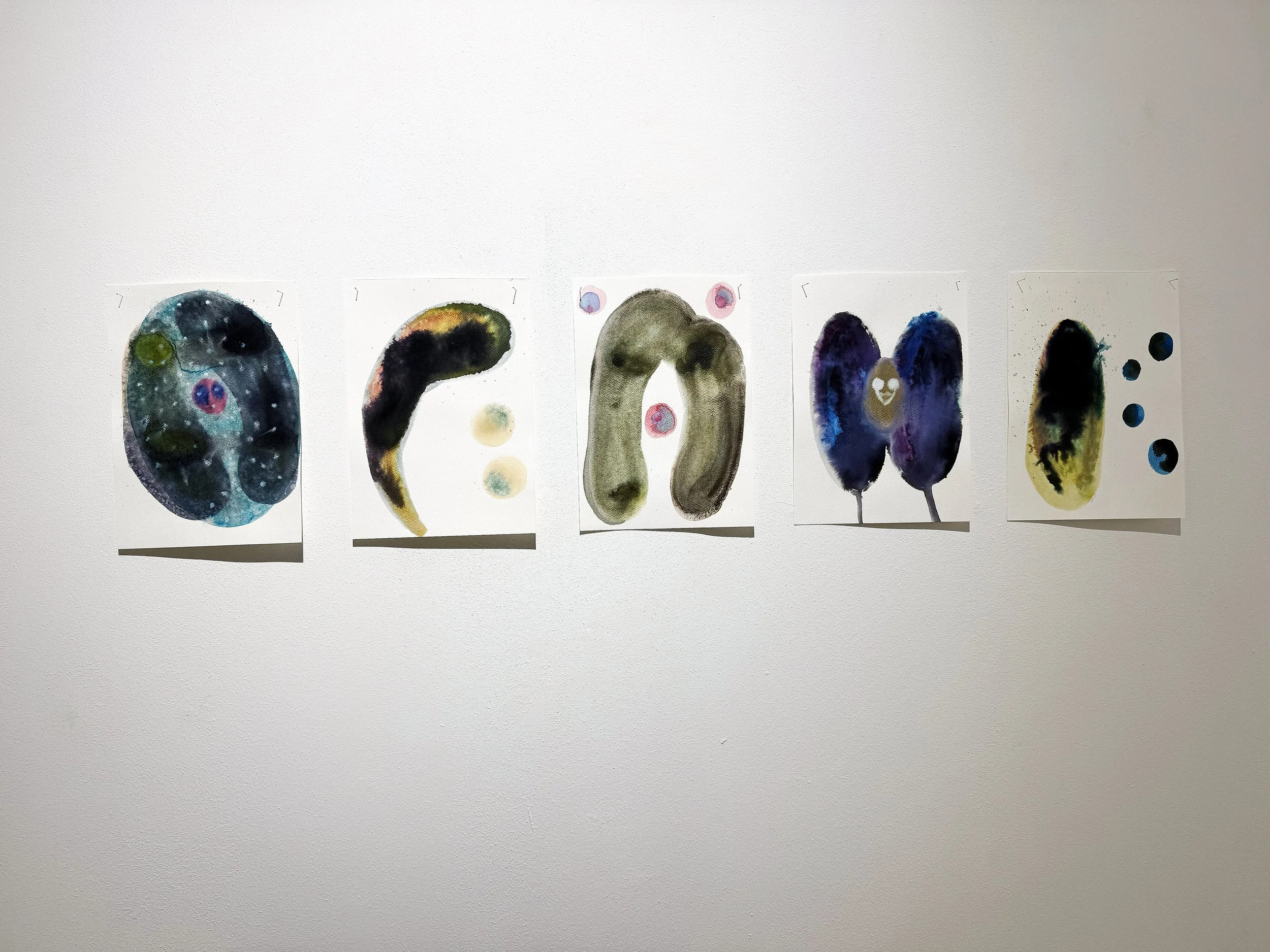
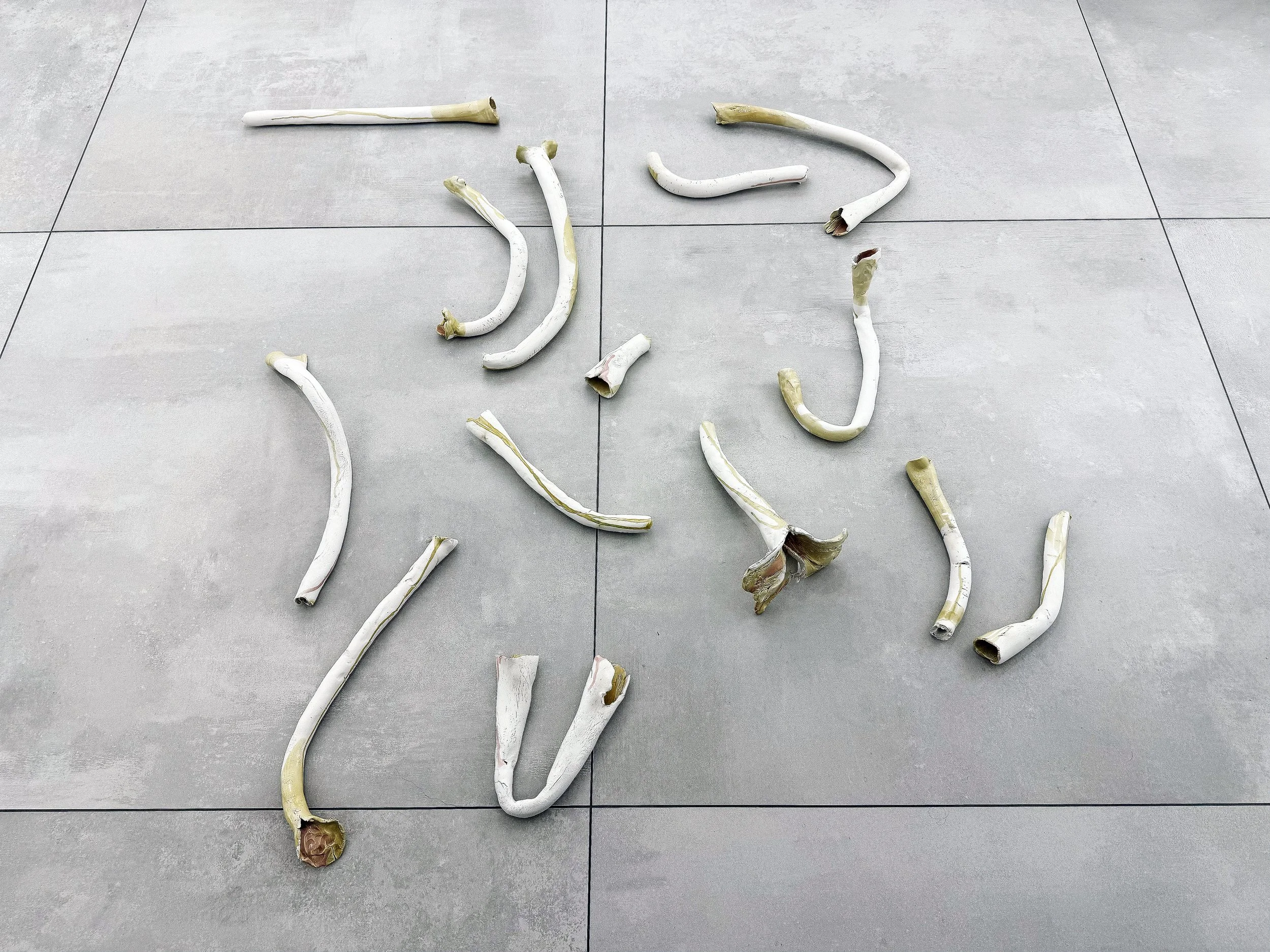
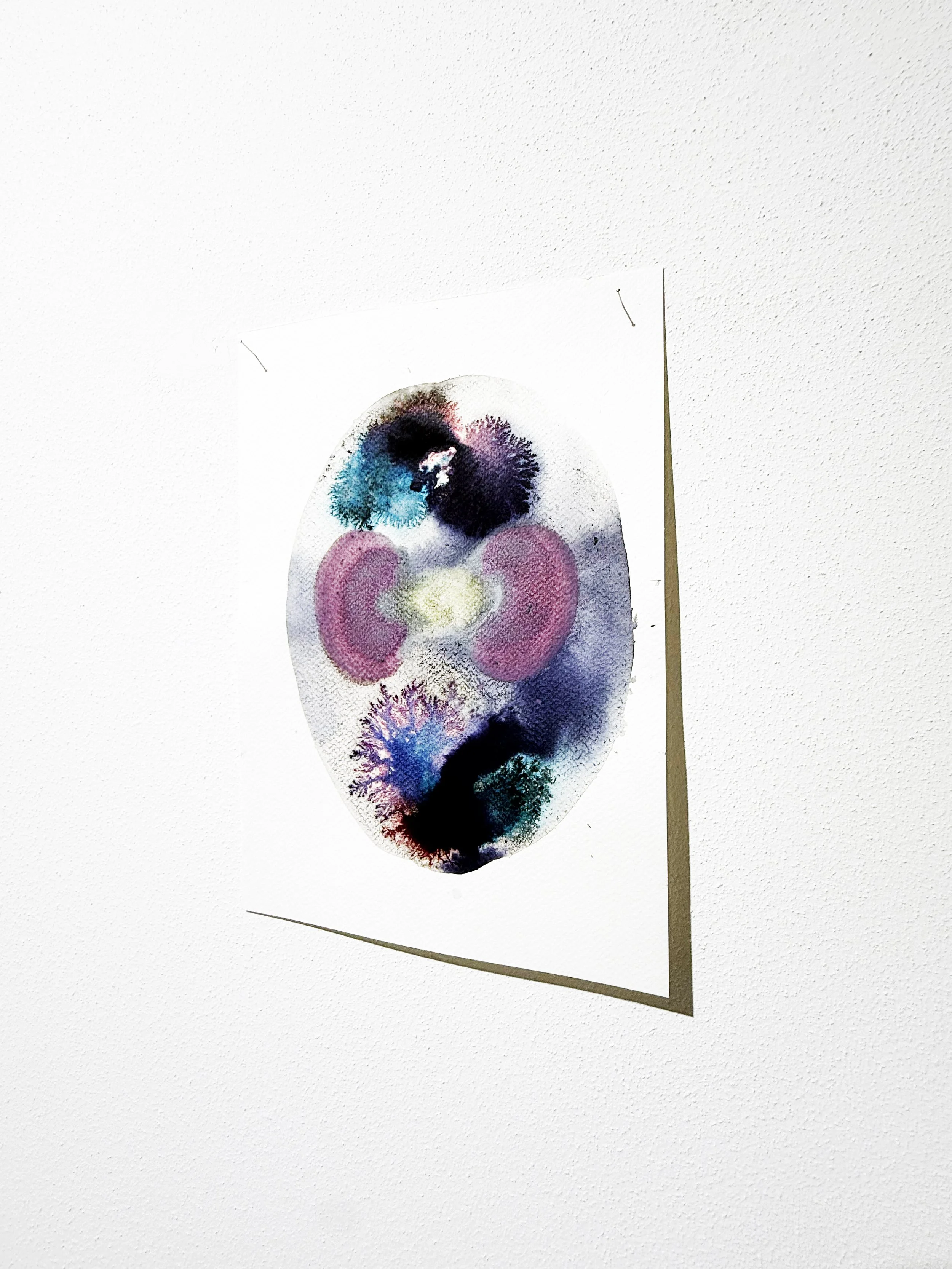
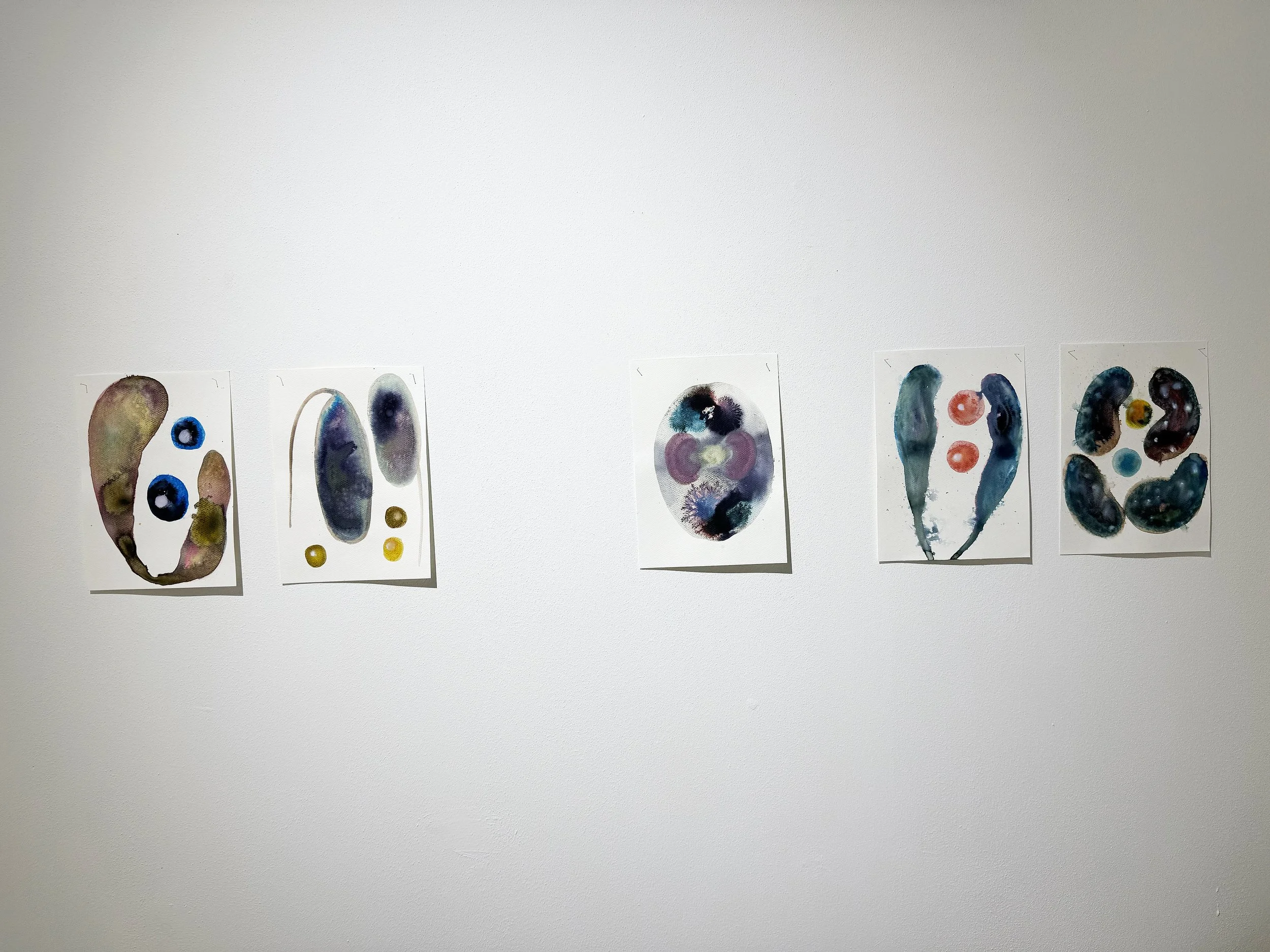
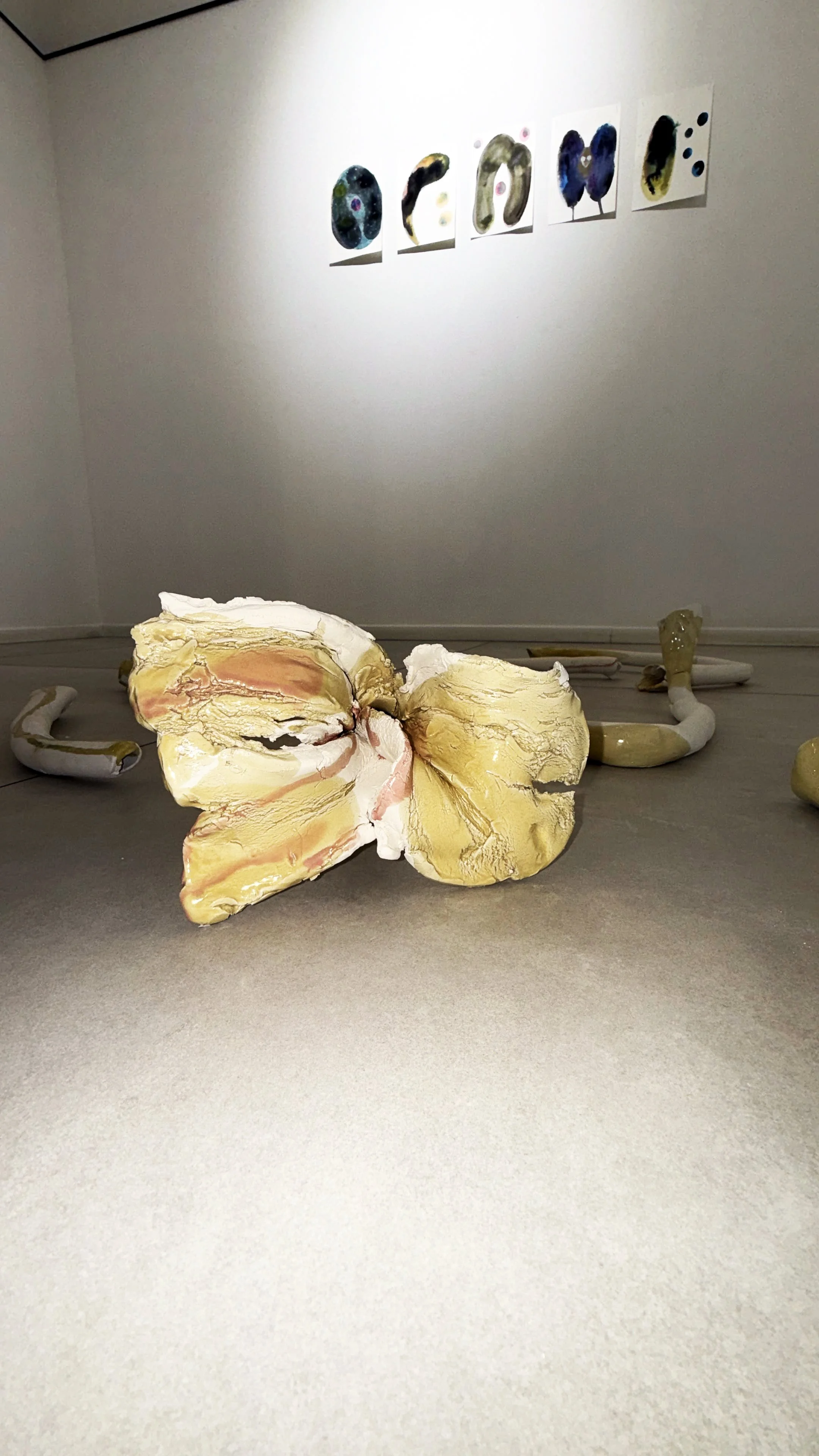
ANASSIMANDRA: FORMAZIONE E DISSOLUZIONE, 2026
Formazione e Dissoluzione esplora la soglia instabile in cui qualcosa diventa percepibile come forma e il momento in cui quella forma inizia a perdere i propri confini.
Attraverso scultura, pittura, carta, materiali trovati e installazione, le forme emergono, si aggregano, si frammentano e si dissolvono senza stabilizzarsi in identità definite. Un volto affiora da una macchia e, simultaneamente, scompare; l’argilla suggerisce corpo, recipiente, organismo o frammento senza diventare definitivamente nessuno di essi; testo e immagine vengono trasformati nuovamente in materia.
Installate in relazione tra loro e con l’architettura, le opere non sono concepite come oggetti autonomi, ma come stati temporanei all’interno di un campo più ampio. Lo spazio, la distanza e il movimento dell’osservatore riorganizzano continuamente queste relazioni.
Formazione e dissoluzione non sono quindi opposti, ma condizioni interconnesse del divenire: ciò che prende forma contiene già la possibilità della propria trasformazione, e ciò che si dissolve diventa la condizione dalla quale qualcos’altro può emergere.
https://www.theopenstudiofirenze.it/
ANASSIMANDRA: REMAINS OF AN UNKNOWN ORDER
2026–ongoing
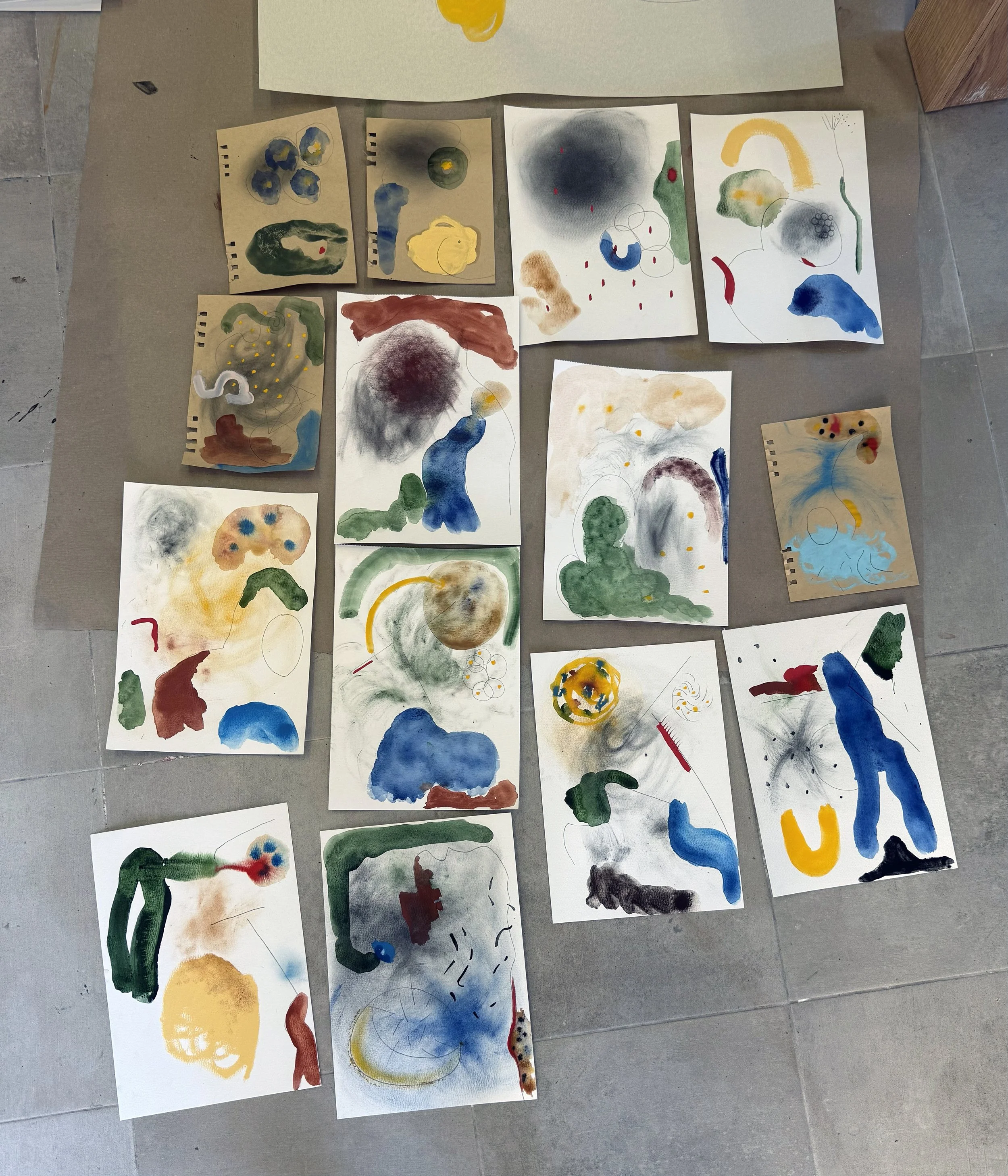
Remains of an Unknown Order brings together paintings on paper and canvas in diverse scales. Each work begins without a predetermined image. Water, pigment, graphite and material deposits generate an unstable field from which forms, traces and partial structures gradually emerge.
The paintings evoke specimens, maps, archaeological remains and scientific images without depicting any of them directly. Their surfaces appear to register an event whose origin cannot be fully reconstructed: something may be forming, dissolving, being measured or returning as a residue. Lines suggest systems of notation but remain incomplete; denser marks interrupt the field without explaining it.
Order is not imposed through composition. It arises provisionally through the act of looking, as the viewer attempts to connect fragments and transform sensation into meaning. Yet each possible interpretation remains unstable. The works inhabit the interval in which evidence is present, but its organizing principle is still unknown.
Part of the ongoing research project Anassimandra, the series considers painting as a field of incomplete knowledge—a place where matter, perception and thought meet before meaning becomes fixed.
ANASSIMANDRA: BETWEEN SENSATION AND LANGUAGe
2026–ongoing
For a long time, my investigation through painting has concerned how sensation begins to approach language—not language as a system of fixed signs, but as the moment before meaning becomes stable.
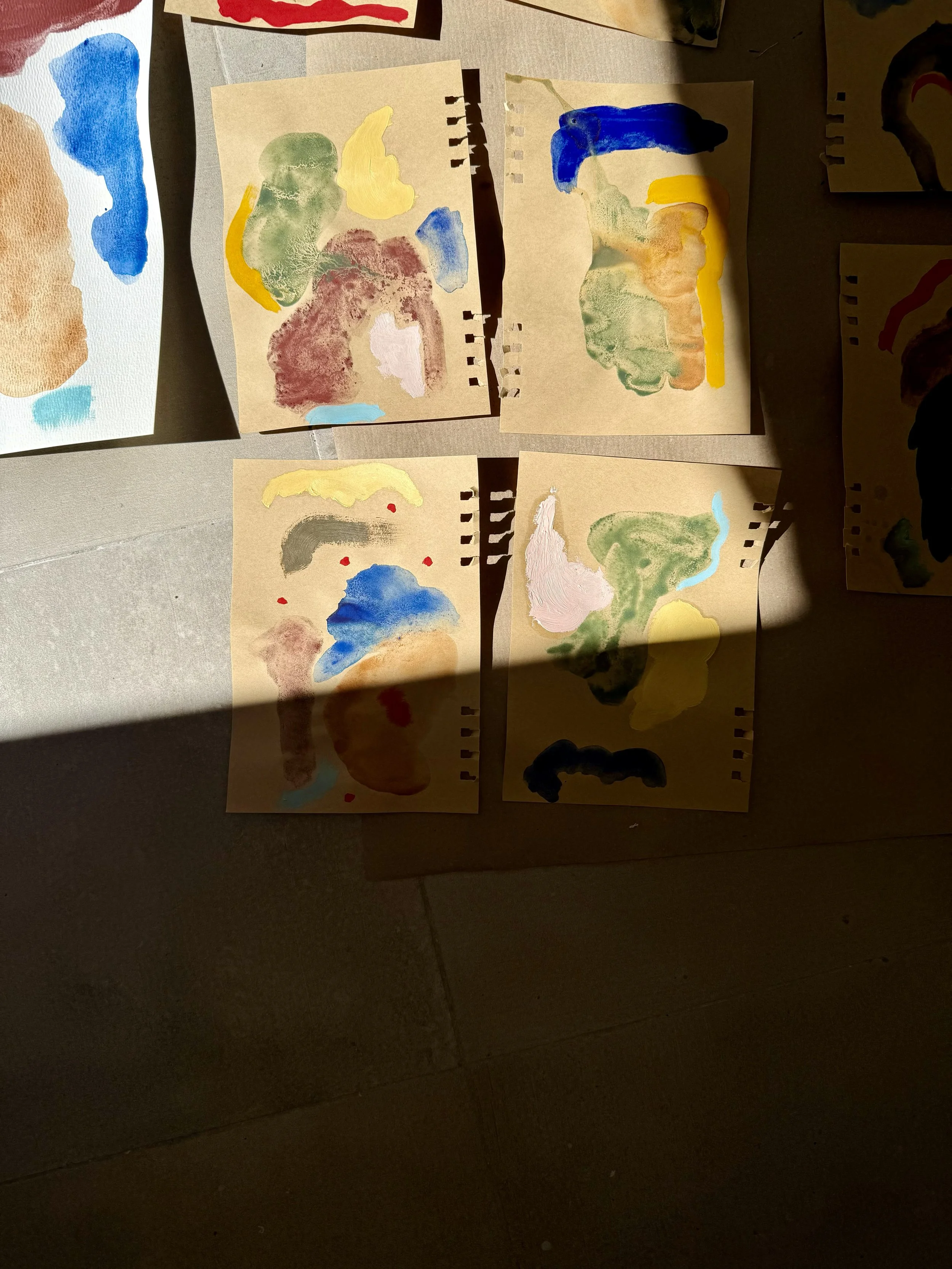
Colour, line, density, transparency and empty space appear as distinct events. They approach one another, collide, interrupt one another or remain separate without being forced into pictorial agreement. Forms occupy an unstable threshold between material presence and sign: they may evoke organisms, fragments, objects or pictograms, yet resist becoming completely identifiable or readableThe exhibition brings together two different conditions of painting. In the large works on canvas, painted events expand to bodily scale. A stain, line or concentration of colour is no longer encountered simply as a mark within an image; it acquires weight, distance and an almost sculptural presence. The canvas becomes a field in which forms confront the viewer physically while remaining suspended between sensation and meaning.
The smaller works on paper form a heterogeneous installation. Made on papers of different dimensions, tones, textures and material qualities, they are not preparatory images or reduced versions of the large paintings. Each is an autonomous instance of investigation—a record of a particular encounter between gesture, matter, chance and response. Distributed through space, they also become fragments within a wider constellation whose relationships remain provisional.
The two scales do not establish a hierarchy. The large canvases concentrate the encounter; the smaller works disperse it. One gives the painted event bodily and architectural presence, while the other allows meanings and relationships to multiply across an installation.
Neither canvas nor paper functions as a neutral support. The tension and physical extension of canvas affect the reach of the body and the scale of the gesture. The tone, absorbency, fragility, and resistance of paper participate differently in what appears. In both, empty areas are active intervals—spaces in which forms remain unresolved and available to new relations.
This principle extends into the architecture of the exhibition. The large paintings require distance and confront the body as singular presences. The smaller works activate walls, passages and thresholds through accumulation, separation and rhythm. The viewer moves between concentrated encounters and dispersed fragments; no single work contains the whole. The exhibition takes form through the shifting relationships perceived between one work and another, and between each work, the space and the moving body.
Anassimandra: Between Sensation and Language explores the threshold at which sensation begins to articulate itself while remaining open—before it can be completely named, organised or understood.
to be continued…